

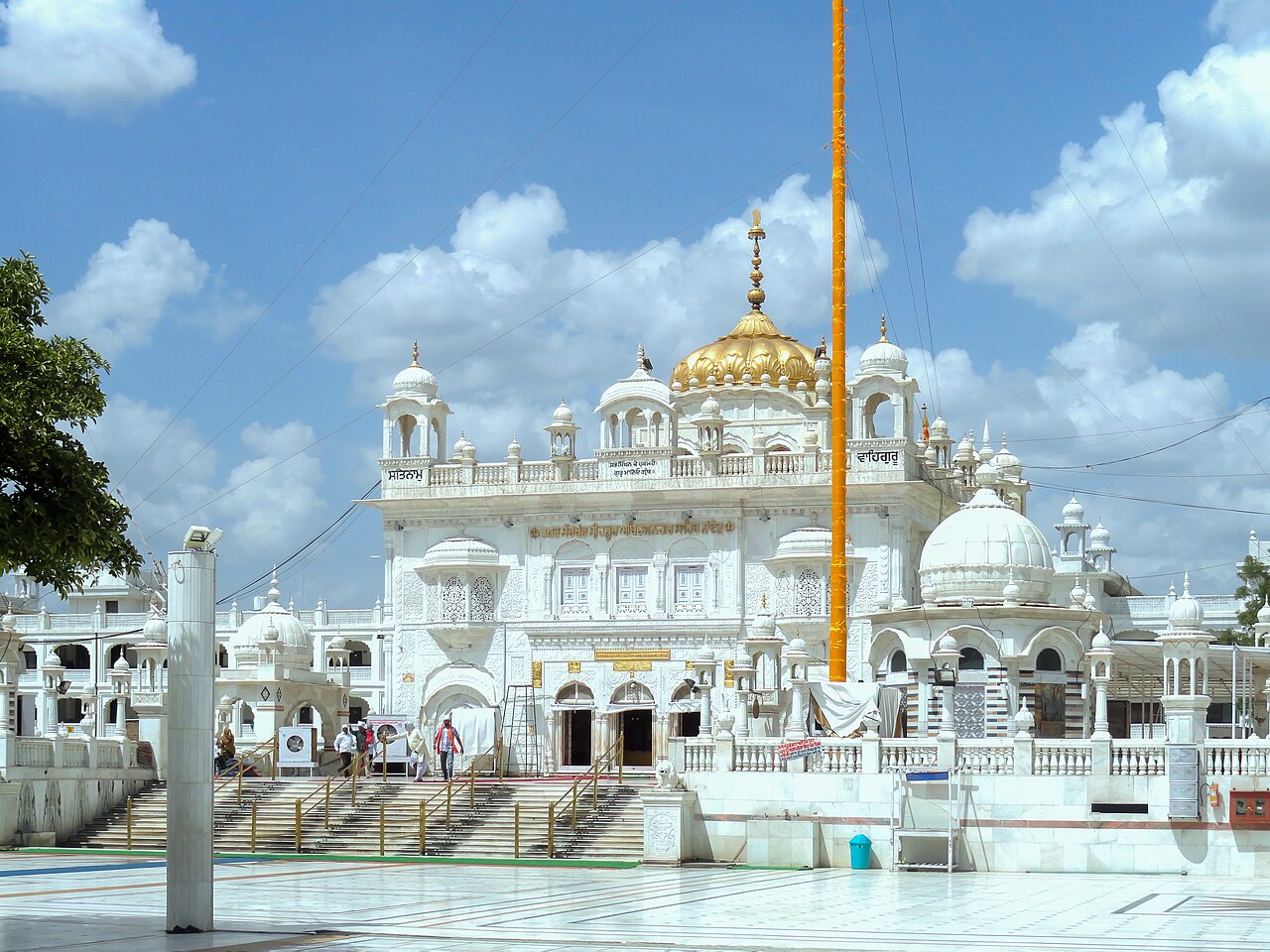
Dying at Nanded without a human successor, Guru Gobind Singh ends the line of personal Gurus and installs the Granth Sahib as the community's eternal Guru; Sikh authority rests ever after in the scripture and the corporate body of the Khalsa, and no living Guru follows him in the mainstream tradition.
Tagged: Sikh The Khalsa Panth
The Event
- Date
- 1708 (exact)
- Also called
- Guru Maneyo Granth
- Era
- The Guru Period; Standard periodization of Sikh history
- Location
- Nanded; today Maharashtra, India
- Traditions
- Sikhism
- Streams
- The Khalsa Panth
- Key figures
- Guru Gobind Singh
- Key texts
- Guru Granth Sahib
How the Tradition Tells It
The mainstream tradition holds that the guruship passed to the Granth and the Panth in 1708 and that no living Guru follows Guru Gobind Singh. The Namdhari and Sant Nirankari movements keep living gurus of their own lines and state their succession differently; this timeline records each position in its own events and does not settle the question between them.
Connections
- Founding of the Khalsa; followed
Primary Sources
- The hukamnamas of Nanded
Secondary Sources
- McLeod, Sikhism (Penguin, 1997)
- Mandair, Sikhism: A Guide for the Perplexed (Bloomsbury, 2013)
Provenance: HIST-0516; confidence 0.95; accessed 2026-10-27.
Related on This Site
- The Guru Granth Sahib, Enthroned Art Entry
- Adi Granth compiled History Event
- Banda Singh Bahadur's conquest of Sirhind History Event
- Founding of the Khalsa History Event
- Guru Gobind Singh History Event
- Guru Hargobind History Event
- Martyrdom of Guru Tegh Bahadur History Event
- Sikh Empire under Ranjit Singh History Event