

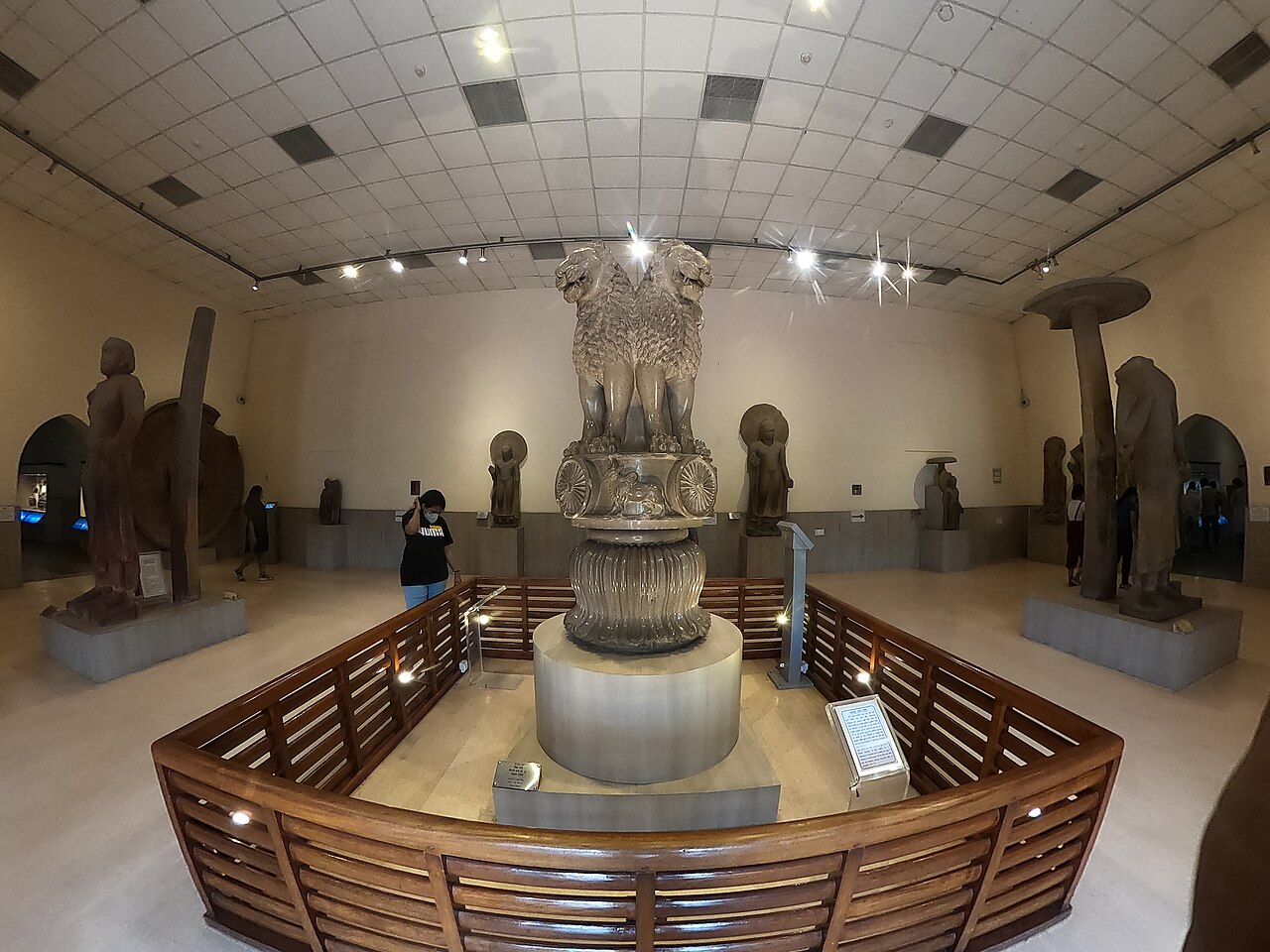
Ashoka rules most of India, turns to Buddhism after the Kalinga war, and inscribes edicts of tolerance and welfare on rock and pillar across his empire; his missions carry Buddhism to Sri Lanka and toward Central Asia, and his pillars become the earliest firm dates in Indian history.
Tagged: Buddhist Mahayana Theravada
The Event
- Date
- 268–232 BCE (exact)
- Era
- Early Buddhism; Standard periodization of Buddhist history
- Location
- Pataliputra; today Patna, Bihar, India
- Traditions
- Buddhism
- Streams
- Theravada, Mahayana
- Key figures
- Ashoka
- Key texts
- The Edicts of Ashoka
Primary Sources
- The rock and pillar edicts of Ashoka
Secondary Sources
- Harvey, An Introduction to Buddhism: Teachings, History and Practices (Cambridge, 2nd ed. 2013)
- Gombrich, Theravada Buddhism: A Social History from Ancient Benares to Modern Colombo (Routledge, 2nd ed. 2006)
Provenance: HIST-0405; confidence 0.95; accessed 2026-10-27.
Related on This Site
- Emergence of the Mahayana History Event
- First Council at Rajagaha History Event
- Life of the Buddha History Event
- Nagarjuna History Event
- Pali Canon committed to writing (Sri Lanka) History Event
- Second Council at Vaishali History Event
- Third Council at Pataliputra History Event
- World Fellowship of Buddhists History Event