

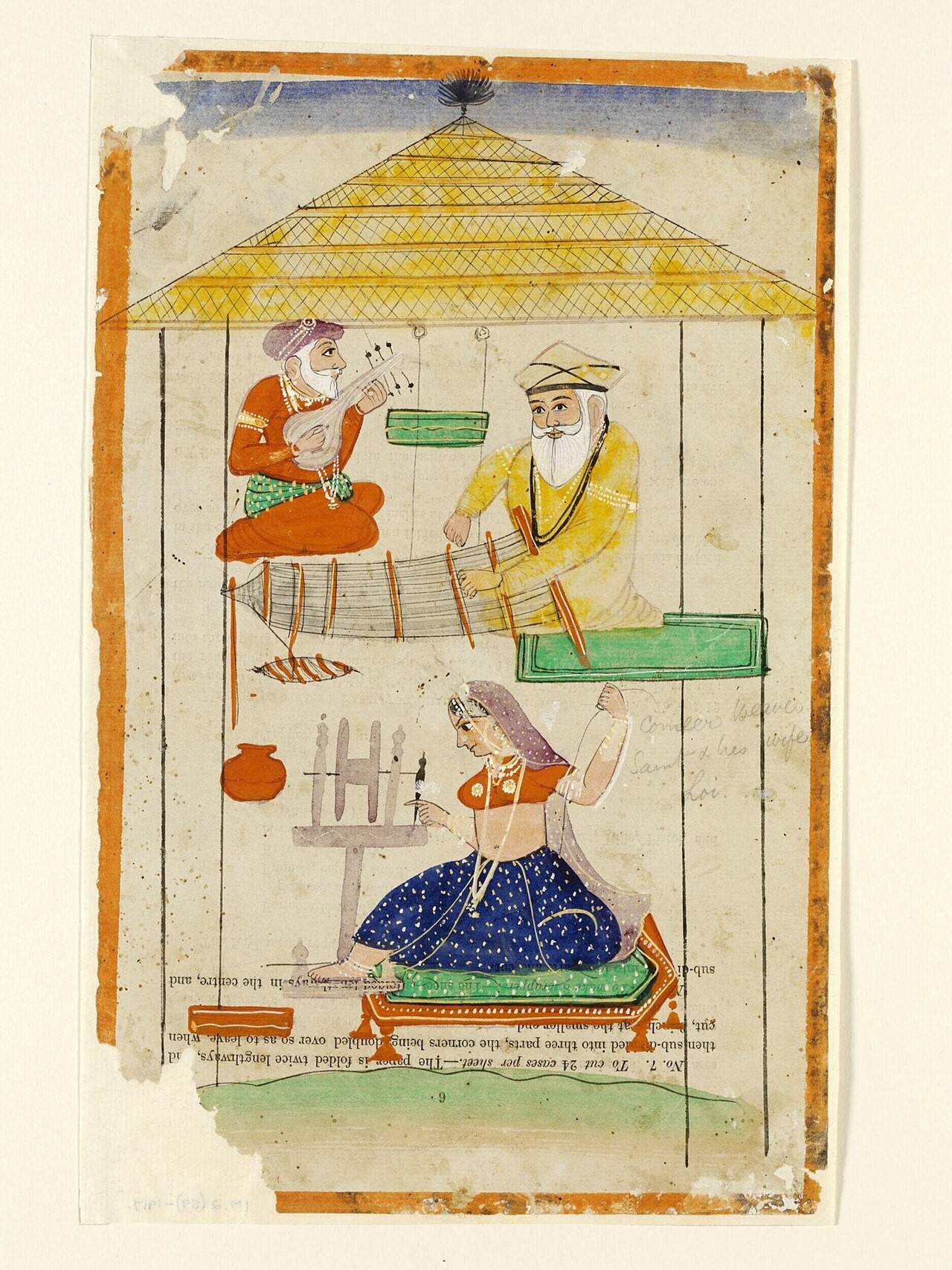
The weaver Kabir of Banaras sings of the one Ram who is no temple god, mocking the orthodoxies of Hindu and Muslim alike; his verses pass into the Sikh scripture, the Dadu Panth's collections, and the Kabir Panth, claimed and contested by all of them.
Tagged: Hindu Hindu Reform Movements Vaishnavism
The Event
- Date
- 15th century (approximate)
- Era
- Medieval; Standard periodization of Hindu history
- Location
- Banaras; today Varanasi, Uttar Pradesh, India
- Traditions
- Hinduism
- Streams
- Vaishnavism, Hindu Reform Movements
- Key figures
- Kabir
- Key texts
- Bijak, Kabir's verses in the Guru Granth Sahib
How the Tradition Tells It
Kabir's Ram is the formless absolute, not Vishnu's avatar, and his verses rebuke temple and mosque alike; the Vaishnava tag records where his devotional idiom sits, while Sikh, Dadu Panthi, and Kabir Panthi traditions each preserve their own Kabir.
Primary Sources
- The Bijak of Kabir
Secondary Sources
- Doniger, The Hindus: An Alternative History (Penguin, 2009)
- Flood, An Introduction to Hinduism (Cambridge, 1996)
Provenance: HIST-0320; confidence 0.85; accessed 2026-10-27.
Related on This Site
- Bhagavad Gita History Event
- Bhagavata Purana History Event
- Gupta Empire History Event
- Mahabharata composed History Event
- Principal Upanishads History Event
- Ramanuja History Event
- Ramayana composed History Event
- Rig Veda composed History Event