

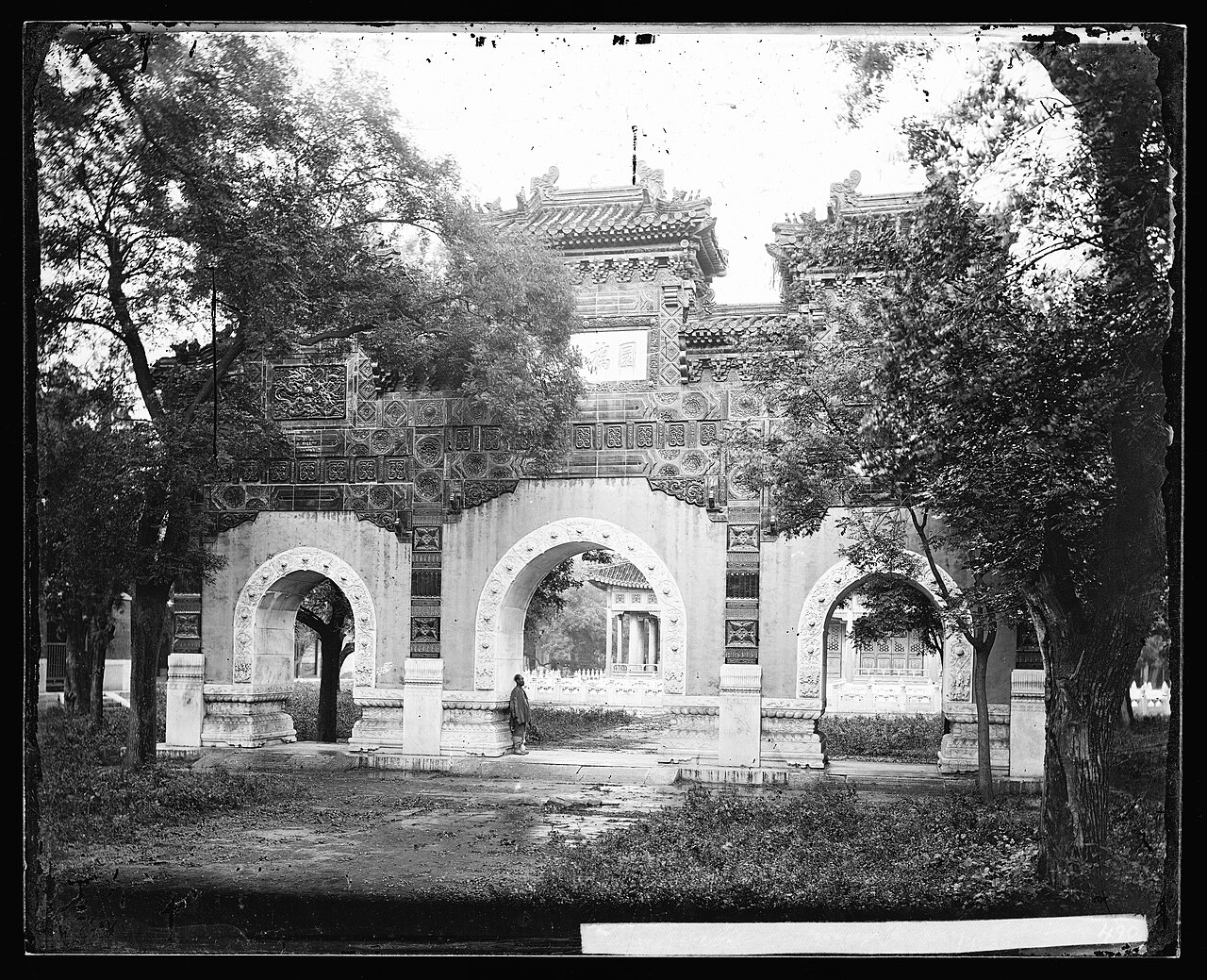
The Manchu Qing kept the Confucian state whole: the examinations, the imperial cult of Confucius, and the sacred edicts read to every village. Within the order, evidential scholars turned philology against Song metaphysics, and Dai Zhen charged that principle, as the examiners used it, had become an instrument of oppression. The dynasty was the Confucian empire's last and longest late form.
Tagged: Confucianism Imperial Confucianism Neo-Confucianism
The Event
- Date
- 1644-1912 (exact)
- Era
- Late Imperial; Standard periodization of Confucian history
- Location
- Beijing; today China
- Traditions
- Confucianism
- Streams
- Imperial Confucianism, Neo-Confucianism
- Key figures
- Kangxi Emperor, Dai Zhen
- Key texts
- Four Books, Five Classics
Primary Sources
- The Sacred Edict of the Kangxi Emperor.
Secondary Sources
- Elman, Benjamin A. A Cultural History of Civil Examinations in Late Imperial China. University of California Press, 2000.
- Yao, Xinzhong. An Introduction to Confucianism. Cambridge University Press, 2000.
Provenance: HIST-0712; confidence 0.95; accessed 2026-10-27.
Related on This Site
- Dong Zhongshu History Event
- Four Books canonized History Event
- Han imperial academy established History Event
- Imperial examinations abolished History Event
- Ming dynasty History Event
- Song dynasty History Event
- Yuan examination system adopts Zhu Xi History Event
- Zhu Xi History Event