

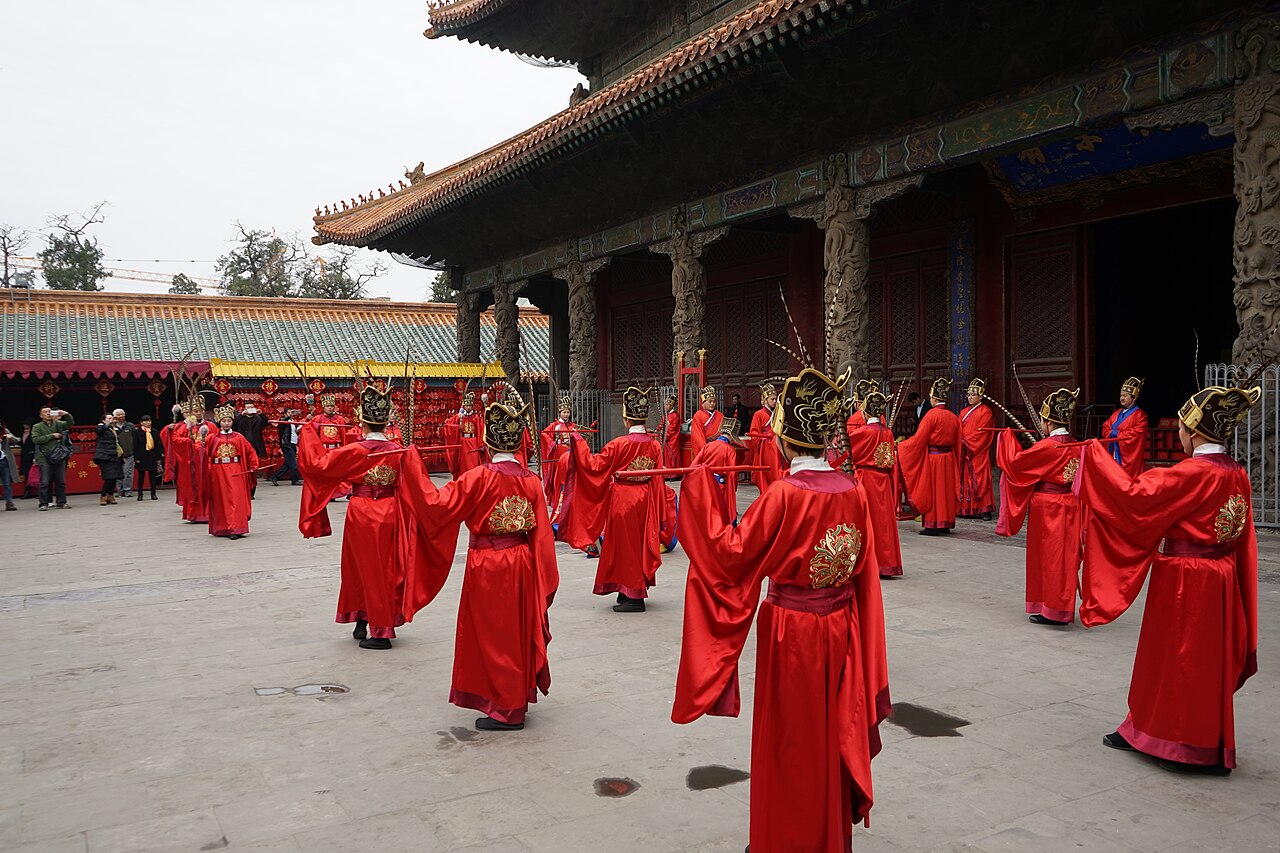
In the two-thousands the tradition the republic and the revolution had condemned returned to public honor: classics reading for children, Confucius Institutes carrying the master's name abroad, state ceremony at Qufu, and scholars debating political Confucianism in the universities. The revival is contested, between state sponsorship and independent scholarship, and it is still unfolding.
Tagged: Revival Confucianism New Confucianism
The Event
- Date
- 2000s (approximate)
- Era
- Modern; Standard periodization of Confucian history
- Location
- China and the diaspora; today China
- Traditions
- Confucianism
- Streams
- New Confucianism
- Key texts
- Analects
How the Tradition Tells It
The revival divides its own heirs. Academic New Confucians in the line of the 1958 manifesto stand apart from the state-sponsored celebration of Confucius, and scholars of political Confucianism dispute whether the tradition should seek democratic forms or distinctly Chinese ones. The revival is a debate, not a settlement.
Connections
- New Confucian Manifesto; follows_from
Primary Sources
- The Analects of Confucius.
Secondary Sources
- Yao, Xinzhong. An Introduction to Confucianism. Cambridge University Press, 2000.
Provenance: HIST-0716; confidence 0.85; accessed 2026-10-27.
Related on This Site
- The Hanging Temple Art Entry
- Daoism and Confucianism Art Tradition
- New Confucian Manifesto History Event
- Oxford Movement Begins History Event
- The Cane Ridge Revival History Event
- The Holy Club at Oxford History Event
- Wesley's Aldersgate Experience History Event
- Confucianism World View