

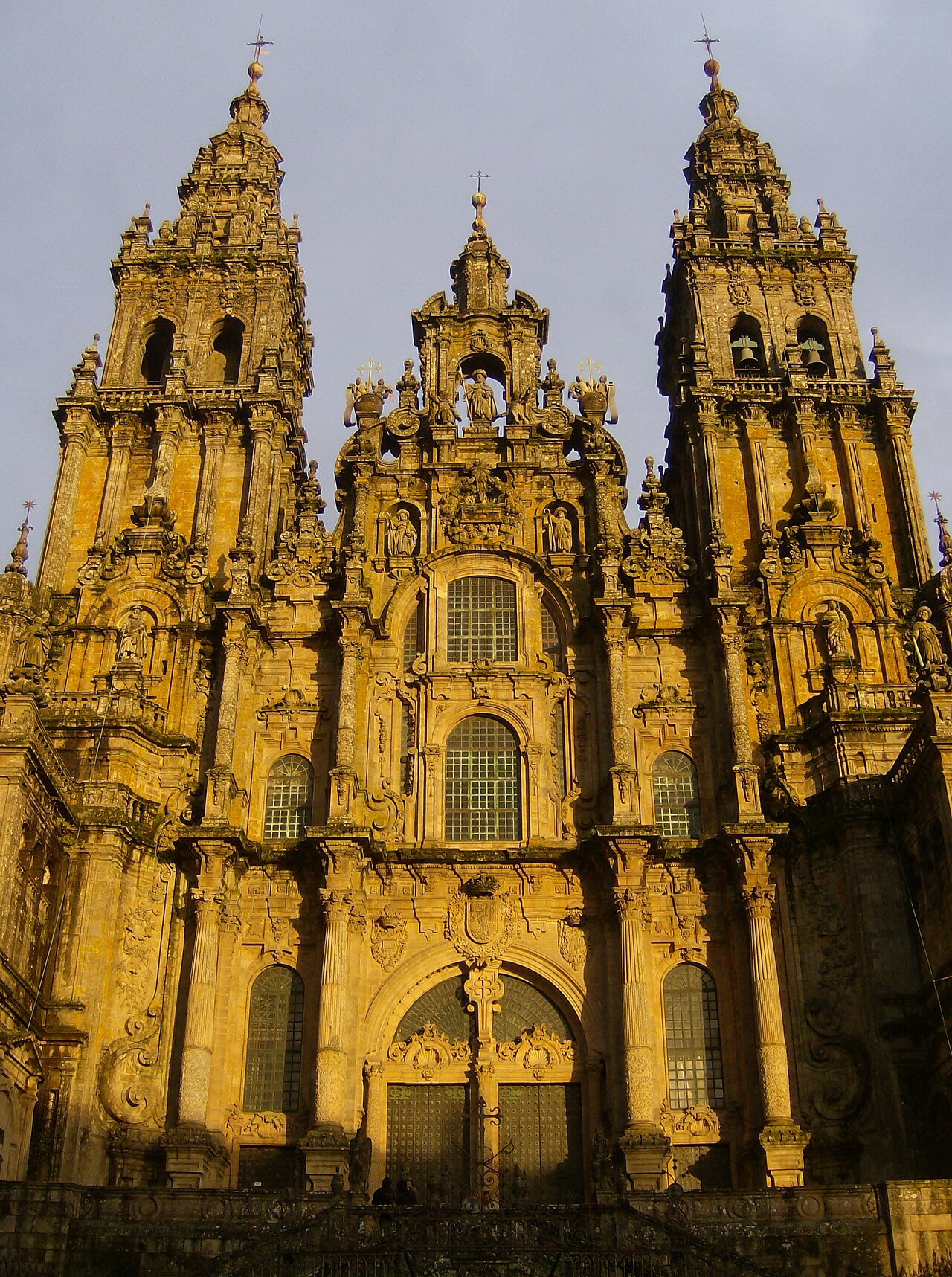
The pilgrim road across Spain to the tomb of the apostle James at Santiago de Compostela, walked by Christians for more than a thousand years.
Tagged: Pilgrimage Santiago de Compostela Christian
The practice
Since the ninth century, pilgrims have walked to Santiago de Compostela in northwestern Spain, where tradition holds the tomb of James the apostle. The routes, called the Camino, cross France and Spain; the French Way alone runs about 780 kilometres from Saint Jean Pied de Port.
How it is kept
Pilgrims carry a credencial, a pilgrim passport stamped at churches and hostels along the road, and sleep in albergues, the pilgrim refuges. Walking at least the final hundred kilometres earns the Compostela, the cathedral's certificate, and pilgrims embrace the statue of Saint James on arrival.
What it means
The Camino turns a journey into a prayer. Weeks of walking strip life down to a road, a pack, and the next village, and pilgrims speak of arriving changed. The road is open to everyone, and the church receives all who complete it in a spirit of search.
Related on This Site
- Jinja Mairi; Visiting the Shrine Devotion
- Pilgrimage (Catholic) Devotion
- Processions Devotion
- Stations of the Cross Devotion
- Yātrā; Pilgrimage Devotion
- Birth of Jesus History Event
- Crucifixion and Resurrection History Event
- Paul's Missionary Journeys History Event