

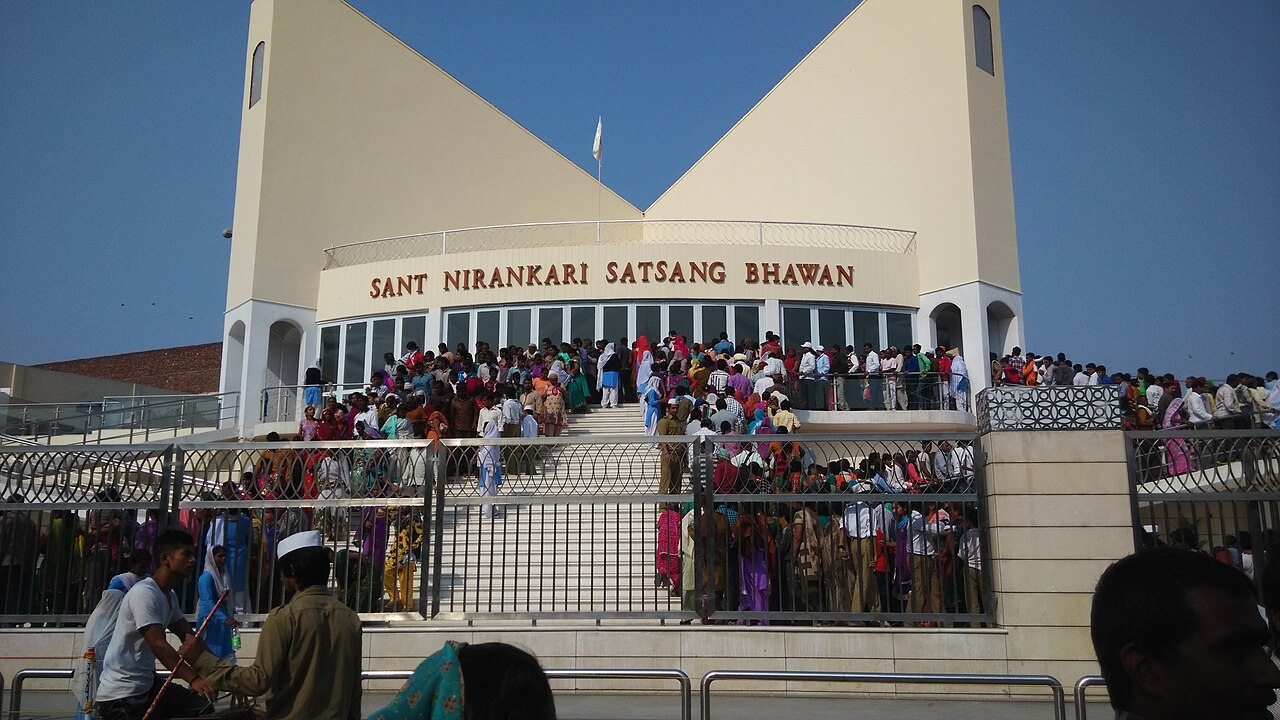
Baba Buta Singh gathers followers at Peshawar and begins the movement that becomes the Sant Nirankari Mission, carried forward by Baba Avtar Singh from 1943; the Mission teaches devotion to a living guru, which sets it apart from the original Nirankari Darbar and, in time, brings it into conflict with the Khalsa mainstream.
The Event
- Date
- 1929 (exact)
- Era
- Reform and Colonial; Standard periodization of Sikh history
- Location
- Peshawar; today Khyber Pakhtunkhwa, Pakistan
- Traditions
- Sikhism
- Streams
- Nirankari
- Key figures
- Baba Buta Singh, Baba Avtar Singh
How the Tradition Tells It
Two bodies carry the Nirankari name. The Nirankari Darbar descends from Baba Dayal Singh's movement of 1851 and honors the Gurus' line; the Sant Nirankari Mission descends from Baba Buta Singh's gathering of 1929 and follows a living guru, which the Khalsa mainstream does not accept. Their shared name is a standing source of confusion that the record keeps distinct.
Primary Sources
- The Mission's own histories
Secondary Sources
- Fenech and McLeod, Historical Dictionary of Sikhism (Rowman and Littlefield, 3rd ed. 2014)
- Oberoi, The Construction of Religious Boundaries (Chicago, 1994)
Provenance: HIST-0530; confidence 0.95; accessed 2026-10-27.
Related on This Site
- Assassination of Baba Gurbachan Singh History Event
- Baba Dayal Singh founds the Nirankari movement History Event
- The Amritsar clash of 1978 History Event
- Punjabi Language
- Sant Bhasha Language
- Ardas Prayer or Creed
- Nitnem Prayer or Creed
- Sikhism World View