

Religious Art & Worldviews · Artists
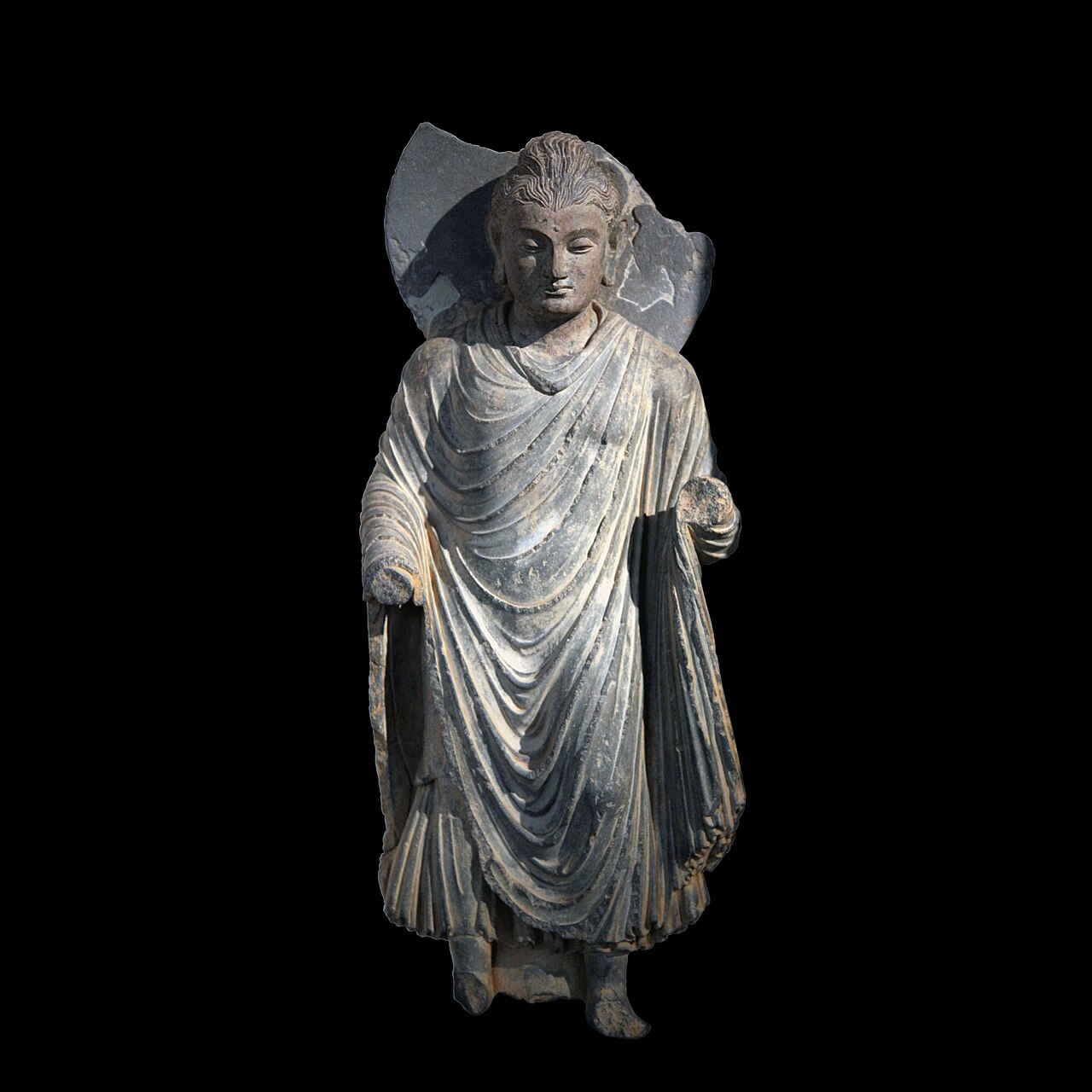
The stucco and schist ateliers of the Peshawar valley that gave the Buddha his first human face — Apollo's features, a monk's robe, a teacher's calm.
Tagged: Sculpture Ancient Pedagogical Iconic Greco-Buddhist Art Buddhist
In Gandhara, where Greek, Persian, and Indian worlds met, anonymous workshops carved the earliest surviving anthropomorphic Buddhas and the great narrative reliefs of his life. Whether the type was invented here or in Mathura is argued elsewhere on this site; the Gandhara face — wavy hair, classical drapery — is its own fact.
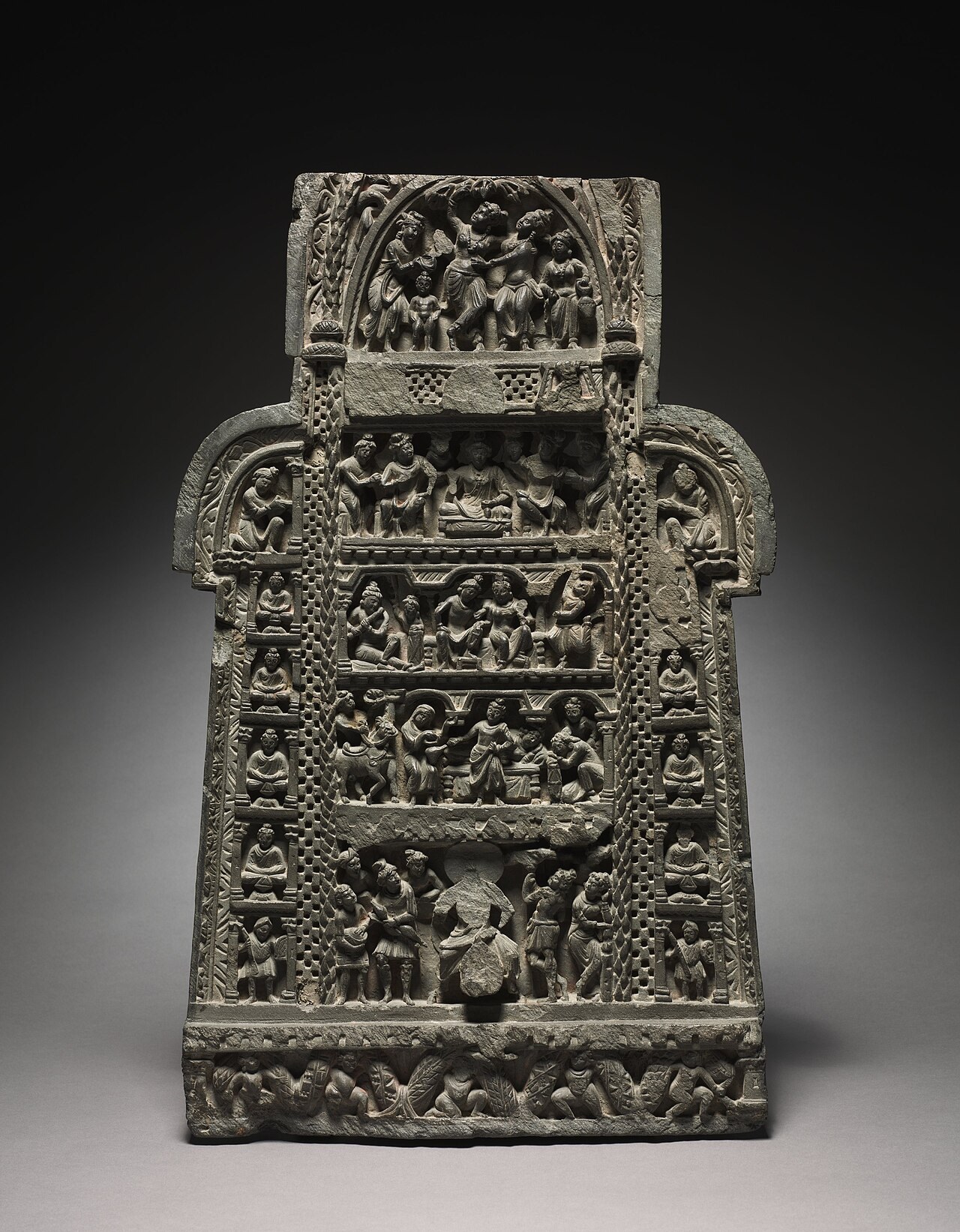
The pictured relief panel compresses the Buddha's biography into registers, a sermon in stone for a pilgrim audience.
Works in This Section
References
Related Across the Site
- A Gandhara Buddha Art Entry — The Buddha in human form from the workshops of Gandhara (1st–3rd century CE): Apollo's face, a Roman toga's folds, and the lakshanas of the Buddha — the image that changed Buddhist art forever.
- The Bharhut Railing Art Entry — The carved sandstone railing of the Bharhut stupa (c. 150–100 BCE), its medallions crowded with jataka tales and labeled in Brahmi — and the Buddha, in scene after scene, present only by symbol.
- The Dura-Europos Synagogue Frescoes Art Entry — The walls of a synagogue on Rome's Euphrates frontier, painted around 244 CE with the whole biblical story in human figures — the standing disproof that ancient Judaism made no religious pictures.
- The Good Shepherd of the Catacombs Art Entry — A young shepherd carrying a lamb across his shoulders, painted and carved across the Roman catacombs: the earliest Christian image of Christ, chosen as a symbol before it was a portrait.
- The Great Stupa at Sanchi Art Entry — The oldest stone stupa in India, begun under Ashoka and crowned with four carved gateways: the reliquary mound as Buddhism's first monumental art, and its first aniconic center.
- The Sarajevo Haggadah Art Entry — A Passover Haggadah illuminated in Barcelona around 1350 — thirty-four miniatures of the biblical story in a Jewish book — treasured, hidden from Nazis and from war, and kept in Sarajevo as the city's emblem of itself.
- The Shiva Linga Art Entry — A polished stone shaft rising from its base, bathed daily in water, milk, and flowers: the aniconic murti of Shiva, worshipped not as a symbol of an absent god but as the god's own form.
- Hakuin Ekaku Artist — The Rinzai Zen reviver who painted Daruma with a sumo wrestler's glare and wrote the koan of the sound of one hand.