

Religious Art & Worldviews · Artists
The Rinzai Zen reviver who painted Daruma with a sumo wrestler's glare and wrote the koan of the sound of one hand.
Tagged: Calligraphy Painting Early Modern Pedagogical Iconic Zen Painting Buddhist Zen
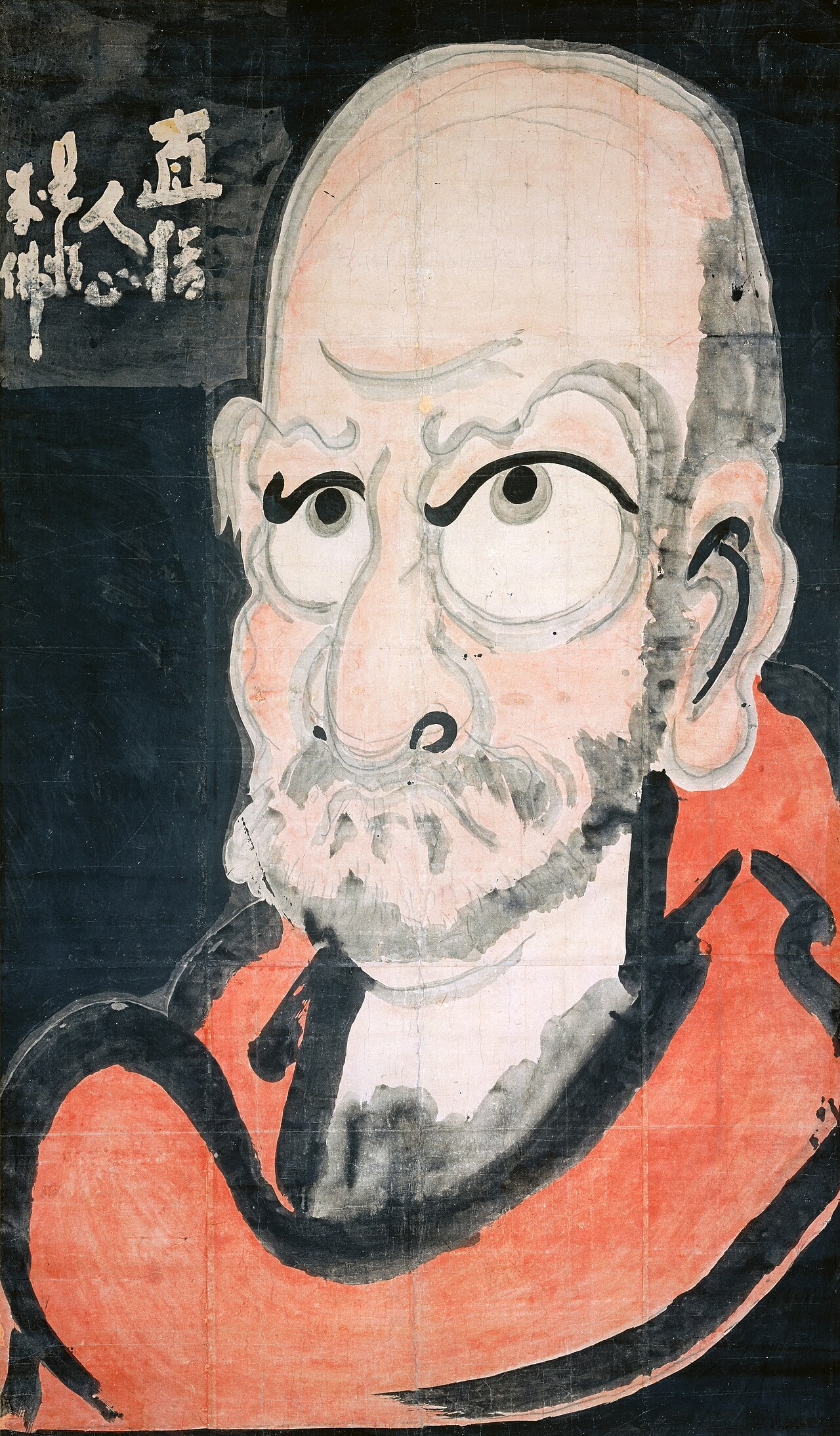
Hakuin reformed Japanese Rinzai Zen and flooded it with art: thousands of ink paintings and calligraphies, made as teaching instruments for laypeople as much as monks. His Darumas are not serene — they glare, grin, and dare the viewer to wake up.
The pictured Daruma is his signature: two brush-loaded eyes and a beard in three strokes, the patriarch as a slap.
References
Related Across the Site
- The Mughal Court Miniature Art Entry — The figural painting of the Mughal emperors' atelier — hunts, audiences, lovers, and saints in jewel-like detail — standing as the descriptive practice beside Islam's normative aniconism.
- Caravaggio Artist — The painter who dragged sacred history into a Roman tavern's light — saints with dirty feet, apostles recruited from the street.
- Liang Kai Artist — The court painter who walked away from the academy to become 'Madman Liang', inventor of the splashed-ink immortal.
- Lucas Cranach the Elder Artist — Luther's friend and the Reformation's image-maker, whose workshop put the evangelical message into altarpieces, portraits, and prints.
- Michelangelo Buonarroti Artist — Sculptor of the Pietà and the David, painter of the Sistine ceiling — the Renaissance's defining sacred artist, shown here in del Conte's portrait.
- Rembrandt van Rijn Artist — The Dutch master who painted the Bible as an interior event — and painted himself, at every age, as its witness.
- Riza-i Abbasi Artist — The Safavid court painter who turned the Persian miniature toward the single figure — youths, lovers, and readers alone on the page.
- Sesshu Toyo Artist — The Zen monk-painter who studied in Ming China and returned to make ink landscape the deepest expression of Japanese Zen.