

Religious Art & Worldviews · Artists
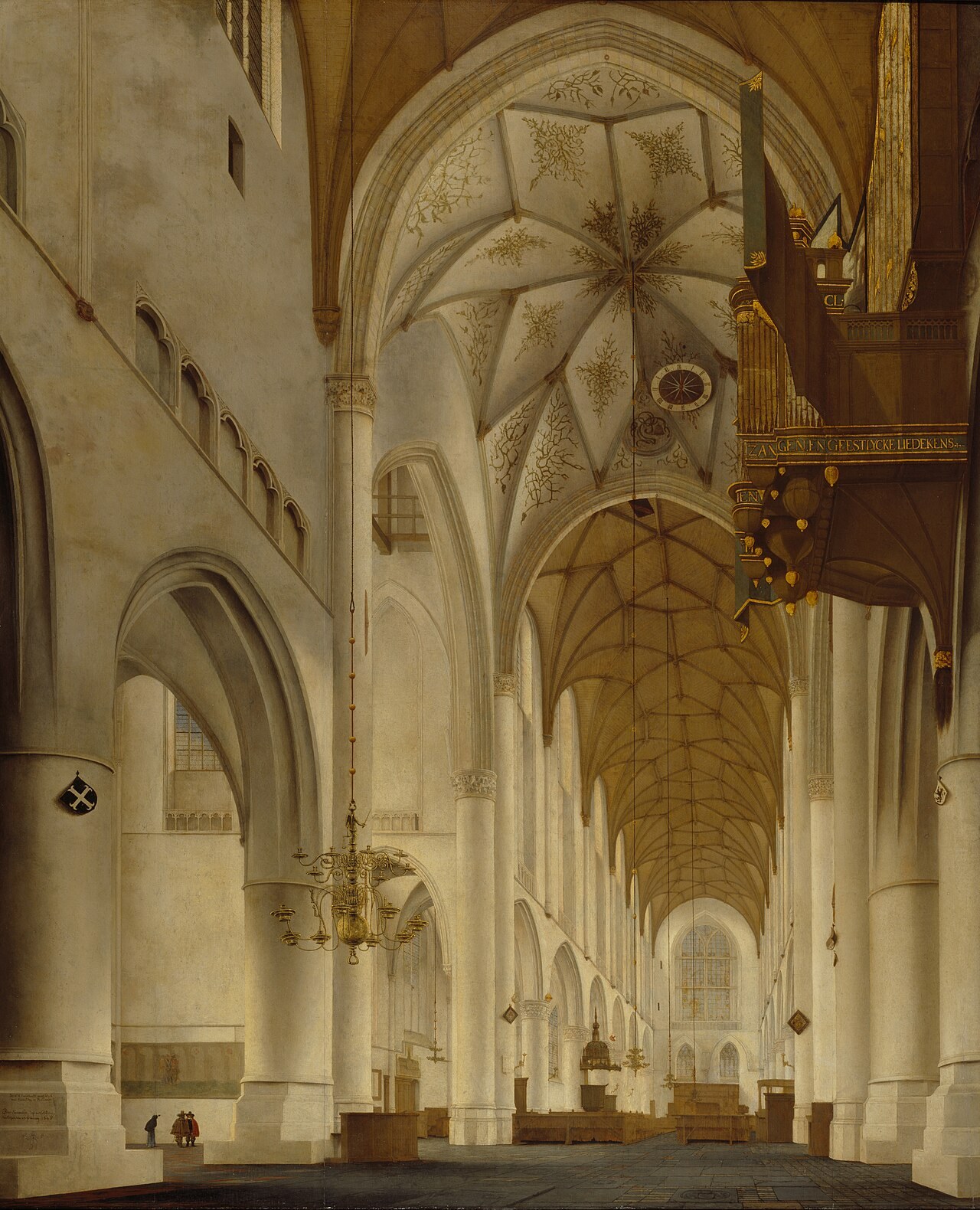
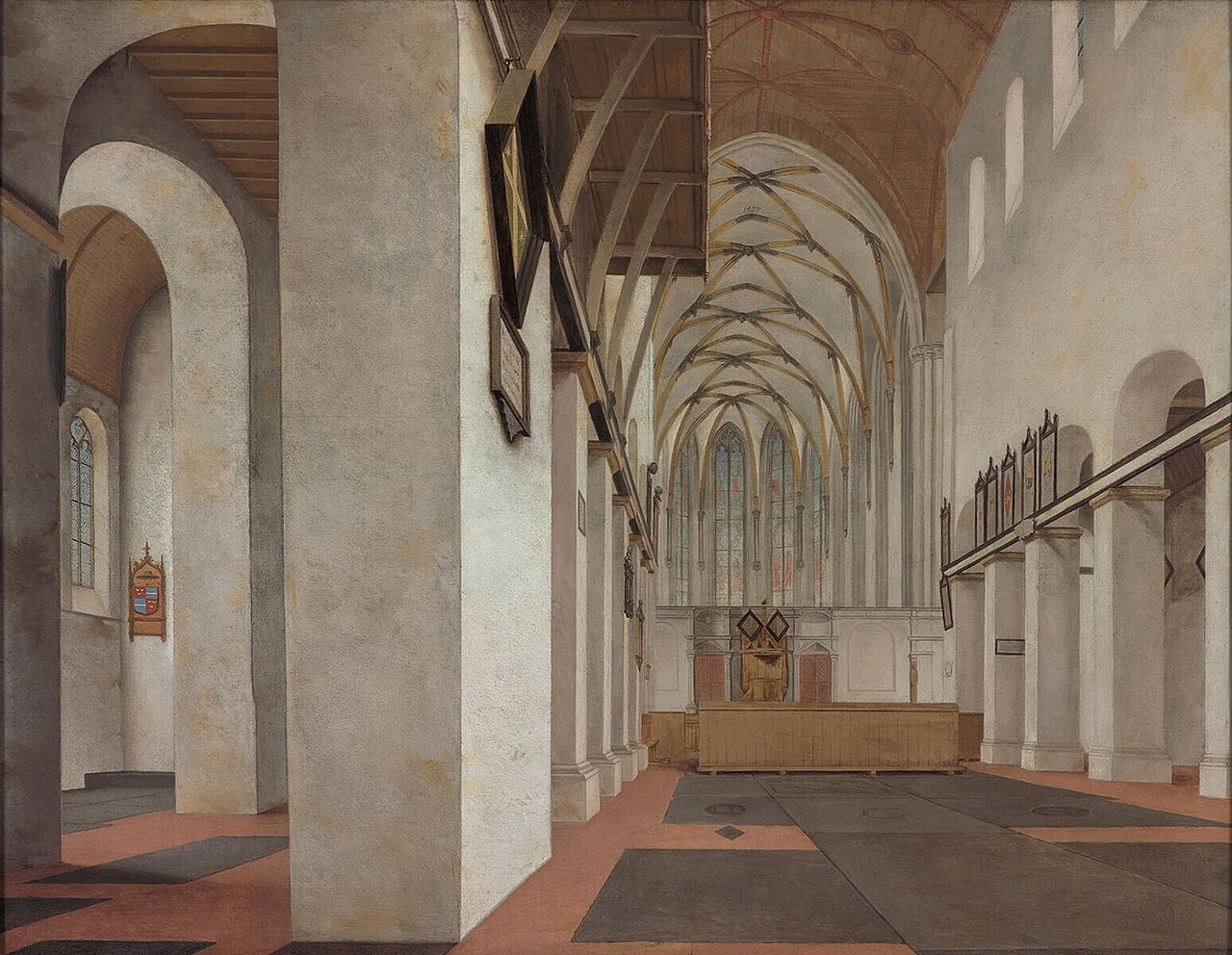
The Dutch painter of whitewashed church interiors — the Reformed interior, empty of images, made itself the picture.
Tagged: Painting Early Modern Devotional Iconoclastic Church Interiors Reformed and Presbyterian
Saenredam measured church interiors on site and painted them with surveyor's patience: bare walls, clear light, a few figures small against the architecture. His St Bavo's interiors are the visual record of the Reformed settlement after iconoclasm.
His work anchors this section's entry on Reformed iconoclasm, where the picture of the emptied church is itself the argument.
Works in This Section
References
Related Across the Site
- Rublev's Trinity Art Entry — Andrei Rublev's icon of the three angels at Abraham's table (c. 1411), painted for the Trinity Lavra of St. Sergius — the supreme achievement of Orthodox icon painting and its theology made visible.
- The Beeldenstorm and Reformed Iconoclasm Art Entry — In the summer of 1566 a wave of image-breaking swept the churches of the Low Countries, and the Reformed territories of Europe methodically emptied their churches: the most sustained Christian iconoclasm since Byzantium.
- The Good Shepherd of the Catacombs Art Entry — A young shepherd carrying a lamb across his shoulders, painted and carved across the Roman catacombs: the earliest Christian image of Christ, chosen as a symbol before it was a portrait.
- The Mughal Court Miniature Art Entry — The figural painting of the Mughal emperors' atelier — hunts, audiences, lovers, and saints in jewel-like detail — standing as the descriptive practice beside Islam's normative aniconism.
- The Tibetan Thangka Art Entry — A portable scroll painting of a Buddha or deity in exact iconometric proportion — a meditation support, a teaching diagram, and a presence, rolled for the road and unrolled for the rite.
- Caravaggio Artist — The painter who dragged sacred history into a Roman tavern's light — saints with dirty feet, apostles recruited from the street.
- Michelangelo Buonarroti Artist — Sculptor of the Pietà and the David, painter of the Sistine ceiling — the Renaissance's defining sacred artist, shown here in del Conte's portrait.
- Rembrandt van Rijn Artist — The Dutch master who painted the Bible as an interior event — and painted himself, at every age, as its witness.