

Religious Art & Worldviews · Artists
The Dutch master who painted the Bible as an interior event — and painted himself, at every age, as its witness.
Tagged: Painting Early Modern Devotional Iconic Biblical Painting Reformed and Presbyterian
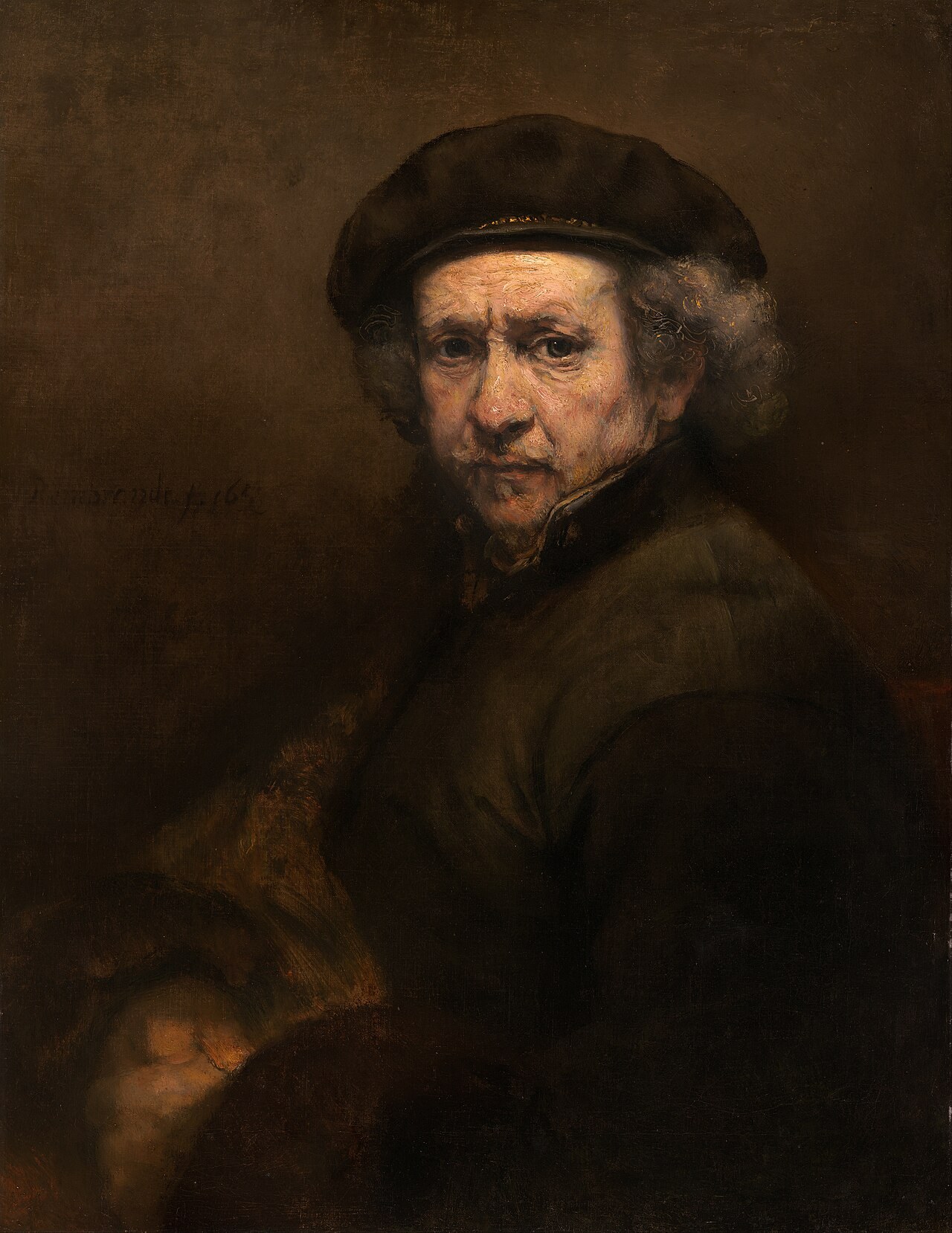
Rembrandt's religious work deepened as his fortunes fell: the late Return of the Prodigal Son and the etched Hundred Guilder Print carry a mercy his prosperous early work only rehearsed. He lived among Amsterdam's Jewish quarter and painted its scholars as his patriarchs.
The pictured self-portrait of 1659, the year of his bankruptcy's aftermath, is the directory's choice: the Bible's painter presenting himself, unflinching, as one of its subjects.
References
Related Across the Site
- Rublev's Trinity Art Entry — Andrei Rublev's icon of the three angels at Abraham's table (c. 1411), painted for the Trinity Lavra of St. Sergius — the supreme achievement of Orthodox icon painting and its theology made visible.
- The Good Shepherd of the Catacombs Art Entry — A young shepherd carrying a lamb across his shoulders, painted and carved across the Roman catacombs: the earliest Christian image of Christ, chosen as a symbol before it was a portrait.
- The Mughal Court Miniature Art Entry — The figural painting of the Mughal emperors' atelier — hunts, audiences, lovers, and saints in jewel-like detail — standing as the descriptive practice beside Islam's normative aniconism.
- Andrei Rublev Artist — The monk-iconographer whose Trinity became the measure of the Russian icon: stillness, humility, and gold held in perfect balance.
- Caravaggio Artist — The painter who dragged sacred history into a Roman tavern's light — saints with dirty feet, apostles recruited from the street.
- Giotto di Bondone Artist — The Florentine who gave biblical figures weight, grief, and ground to stand on — the hinge between medieval symbol and Renaissance story.
- Michelangelo Buonarroti Artist — Sculptor of the Pietà and the David, painter of the Sistine ceiling — the Renaissance's defining sacred artist, shown here in del Conte's portrait.
- Pieter Saenredam Artist — The Dutch painter of whitewashed church interiors — the Reformed interior, empty of images, made itself the picture.