

Religious Art & Worldviews · Artists
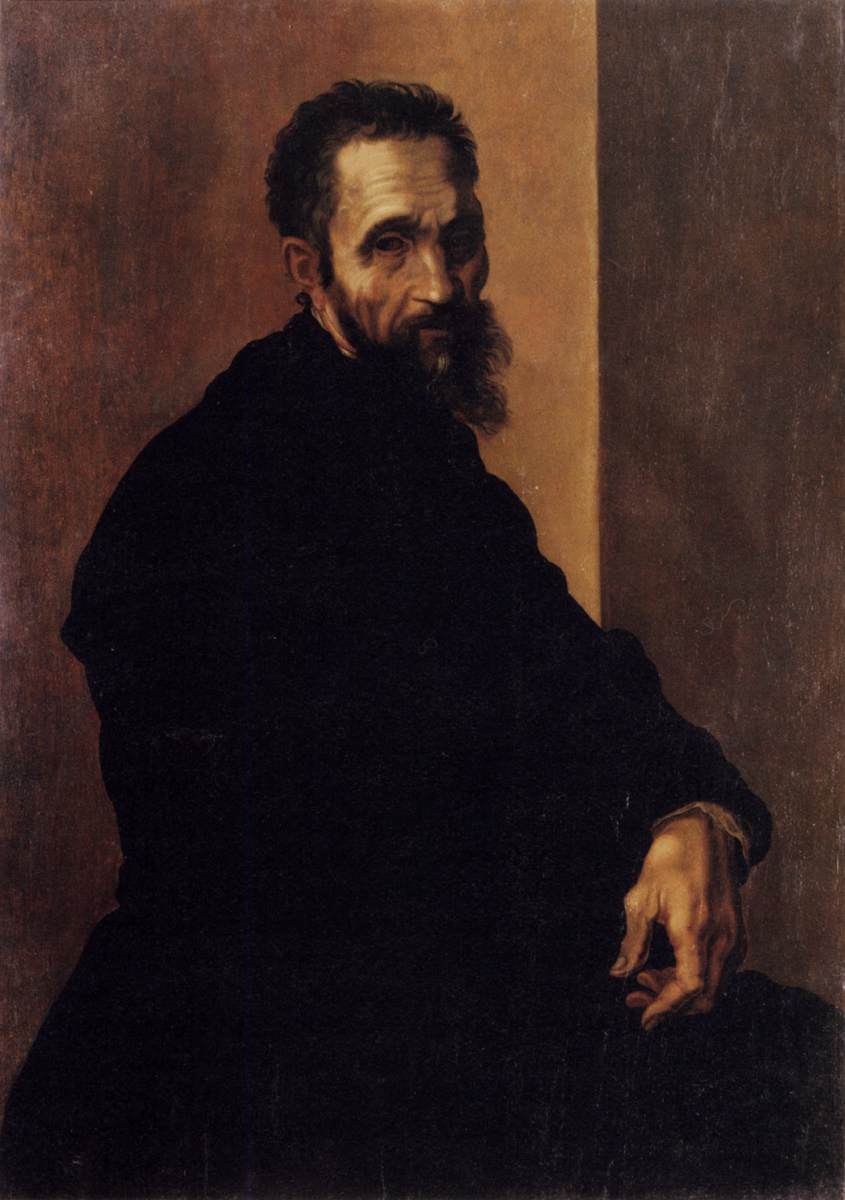
Sculptor of the Pietà and the David, painter of the Sistine ceiling — the Renaissance's defining sacred artist, shown here in del Conte's portrait.
Tagged: Painting Sculpture Early Modern Devotional Iconic Renaissance Catholic
Michelangelo held himself a sculptor, and his religious work is a theology of the body: creation, incarnation, and judgment rendered as anatomy under strain. The Sistine ceiling (1508–1512) and the Last Judgment (1534–1541) frame a career spent in the Vatican's service.
His late Pietà drawings, made in devotion and given to friends, show the other register: spare, repeated, prayerful.
References
Related Across the Site
- Rublev's Trinity Art Entry — Andrei Rublev's icon of the three angels at Abraham's table (c. 1411), painted for the Trinity Lavra of St. Sergius — the supreme achievement of Orthodox icon painting and its theology made visible.
- The Ganesh Chaturthi Murti Art Entry — A clay Ganesh, modeled and painted by neighborhood artisans, worshipped in streets and homes for up to eleven days, then carried in procession and immersed: the murti as a guest who is honored and bid farewell.
- The Good Shepherd of the Catacombs Art Entry — A young shepherd carrying a lamb across his shoulders, painted and carved across the Roman catacombs: the earliest Christian image of Christ, chosen as a symbol before it was a portrait.
- The Mughal Court Miniature Art Entry — The figural painting of the Mughal emperors' atelier — hunts, audiences, lovers, and saints in jewel-like detail — standing as the descriptive practice beside Islam's normative aniconism.
- Caravaggio Artist — The painter who dragged sacred history into a Roman tavern's light — saints with dirty feet, apostles recruited from the street.
- Fra Angelico Artist — The Dominican friar whose frescoes for his brothers' cells at San Marco were painted as instruments of prayer, one mystery per monk.
- Giotto di Bondone Artist — The Florentine who gave biblical figures weight, grief, and ground to stand on — the hinge between medieval symbol and Renaissance story.
- Rembrandt van Rijn Artist — The Dutch master who painted the Bible as an interior event — and painted himself, at every age, as its witness.