

Religious Art & Worldviews · Artists
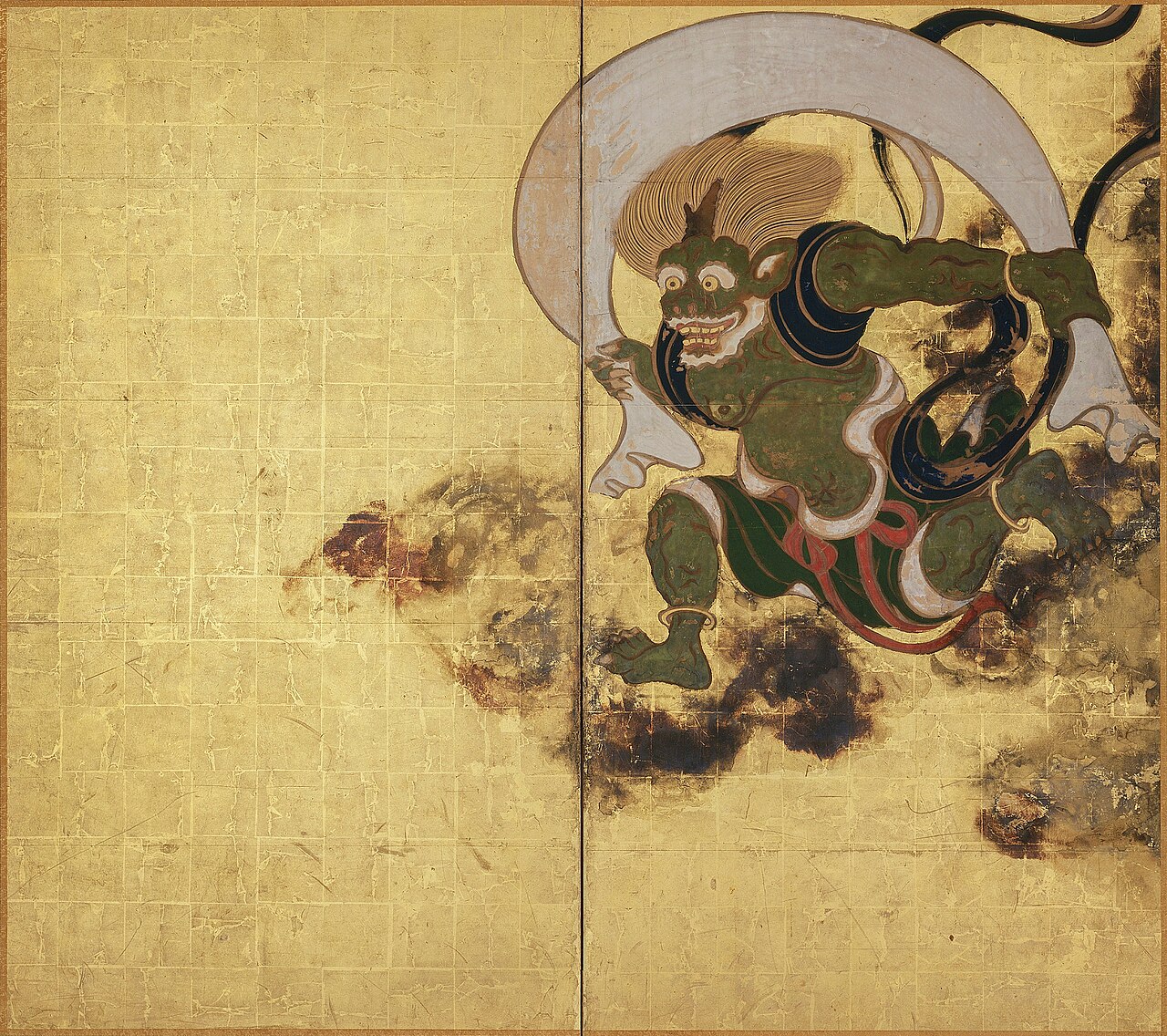
Founder of the Rinpa school, painter of the Wind God and Thunder God screens — gold ground, divine weather, design as devotion.
Tagged: Painting Early Modern Decorative Iconic Rinpa Shinto
Sotatsu ran a Kyoto fan shop and rose to paint for court and great temples, reviving the classical themes of the Heian age in a decorative idiom of gold cloud and flat, singing color that became Rinpa.
The pictured Fujin, the wind god with his bag of winds, is one panel of his most famous pair of screens; the file names on the surviving copies swap the gods, and this directory labels by what the picture shows.
References
Related Across the Site
- The Good Shepherd of the Catacombs Art Entry — A young shepherd carrying a lamb across his shoulders, painted and carved across the Roman catacombs: the earliest Christian image of Christ, chosen as a symbol before it was a portrait.
- The Mughal Court Miniature Art Entry — The figural painting of the Mughal emperors' atelier — hunts, audiences, lovers, and saints in jewel-like detail — standing as the descriptive practice beside Islam's normative aniconism.
- Caravaggio Artist — The painter who dragged sacred history into a Roman tavern's light — saints with dirty feet, apostles recruited from the street.
- Hakuin Ekaku Artist — The Rinzai Zen reviver who painted Daruma with a sumo wrestler's glare and wrote the koan of the sound of one hand.
- Kamal ud-Din Behzad Artist — The master of the Timurid miniature, head of the royal atelier at Herat, whose building sites, gardens, and crowds set the Persian standard.
- Michelangelo Buonarroti Artist — Sculptor of the Pietà and the David, painter of the Sistine ceiling — the Renaissance's defining sacred artist, shown here in del Conte's portrait.
- Rembrandt van Rijn Artist — The Dutch master who painted the Bible as an interior event — and painted himself, at every age, as its witness.
- Riza-i Abbasi Artist — The Safavid court painter who turned the Persian miniature toward the single figure — youths, lovers, and readers alone on the page.