

Religious Art & Worldviews · Artists
The monk-iconographer whose Trinity became the measure of the Russian icon: stillness, humility, and gold held in perfect balance.
Tagged: Painting Medieval Devotional Iconic Iconography Eastern Orthodox
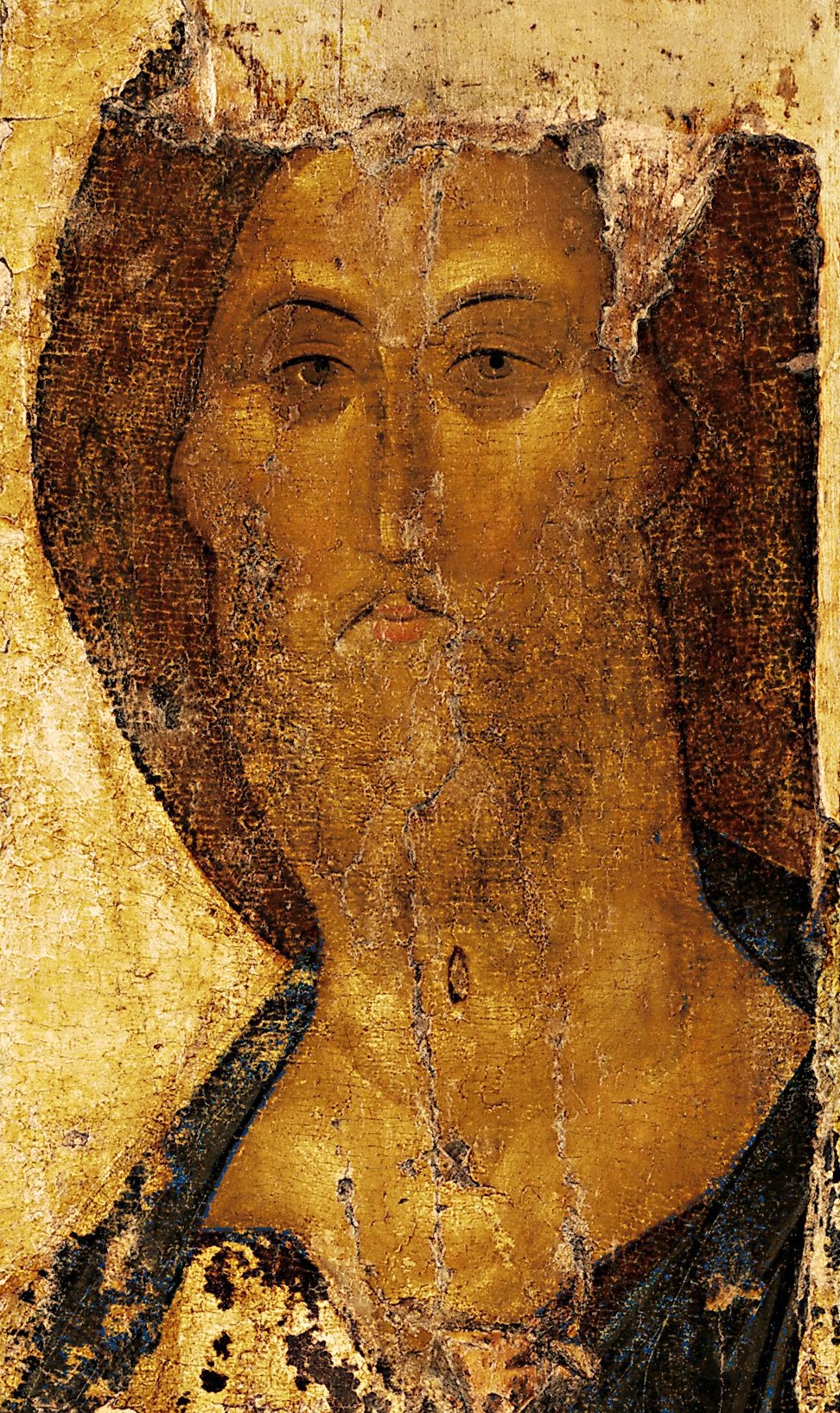
Rublev worked in the orbit of St Sergius of Radonezh, painting frescoes at Vladimir and icons for the Trinity Lavra his master founded. Almost nothing of his life is documented, and the church canonized him in 1988 on the strength of the work alone.
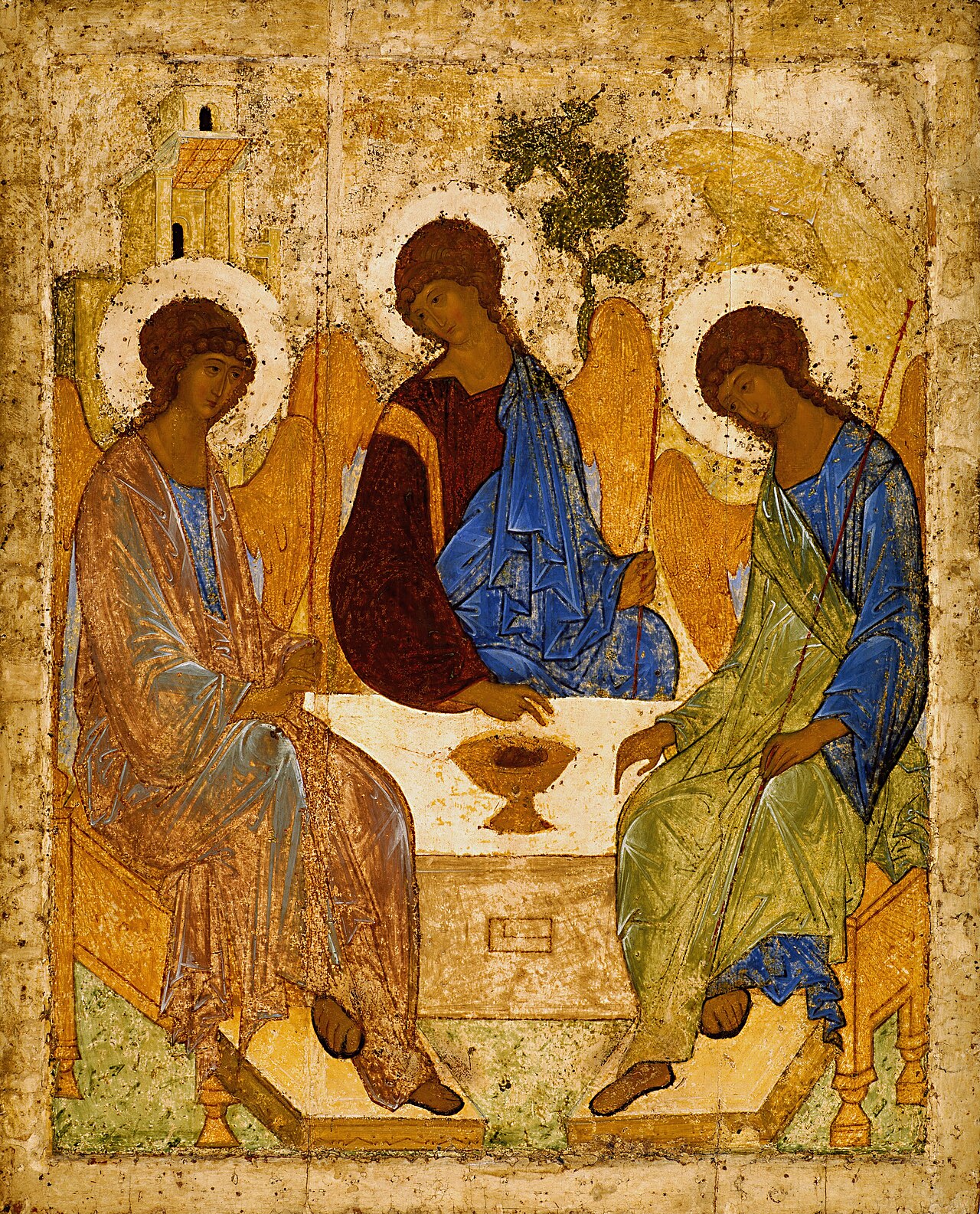
His Trinity — three angels at Abraham's table, composed in a slow circle — is reproduced as an art entry in this section. Its fame rests on restraint: no narrative clutter, no drama, only the mutual regard of the three figures.
Works in This Section
References
Related Across the Site
- Rublev's Trinity Art Entry — Andrei Rublev's icon of the three angels at Abraham's table (c. 1411), painted for the Trinity Lavra of St. Sergius — the supreme achievement of Orthodox icon painting and its theology made visible.
- The Good Shepherd of the Catacombs Art Entry — A young shepherd carrying a lamb across his shoulders, painted and carved across the Roman catacombs: the earliest Christian image of Christ, chosen as a symbol before it was a portrait.
- The Tibetan Thangka Art Entry — A portable scroll painting of a Buddha or deity in exact iconometric proportion — a meditation support, a teaching diagram, and a presence, rolled for the road and unrolled for the rite.
- Caravaggio Artist — The painter who dragged sacred history into a Roman tavern's light — saints with dirty feet, apostles recruited from the street.
- Fra Angelico Artist — The Dominican friar whose frescoes for his brothers' cells at San Marco were painted as instruments of prayer, one mystery per monk.
- Giotto di Bondone Artist — The Florentine who gave biblical figures weight, grief, and ground to stand on — the hinge between medieval symbol and Renaissance story.
- Liang Kai Artist — The court painter who walked away from the academy to become 'Madman Liang', inventor of the splashed-ink immortal.
- Michelangelo Buonarroti Artist — Sculptor of the Pietà and the David, painter of the Sistine ceiling — the Renaissance's defining sacred artist, shown here in del Conte's portrait.