

Religious Art & Worldviews · Artists
Chief architect of the Ottoman sultans for fifty years, builder of the Süleymaniye and the Selimiye — the classical Ottoman mosque perfected.
Tagged: Architecture Early Modern Liturgical Ottoman Architecture Muslim Sunni Islam
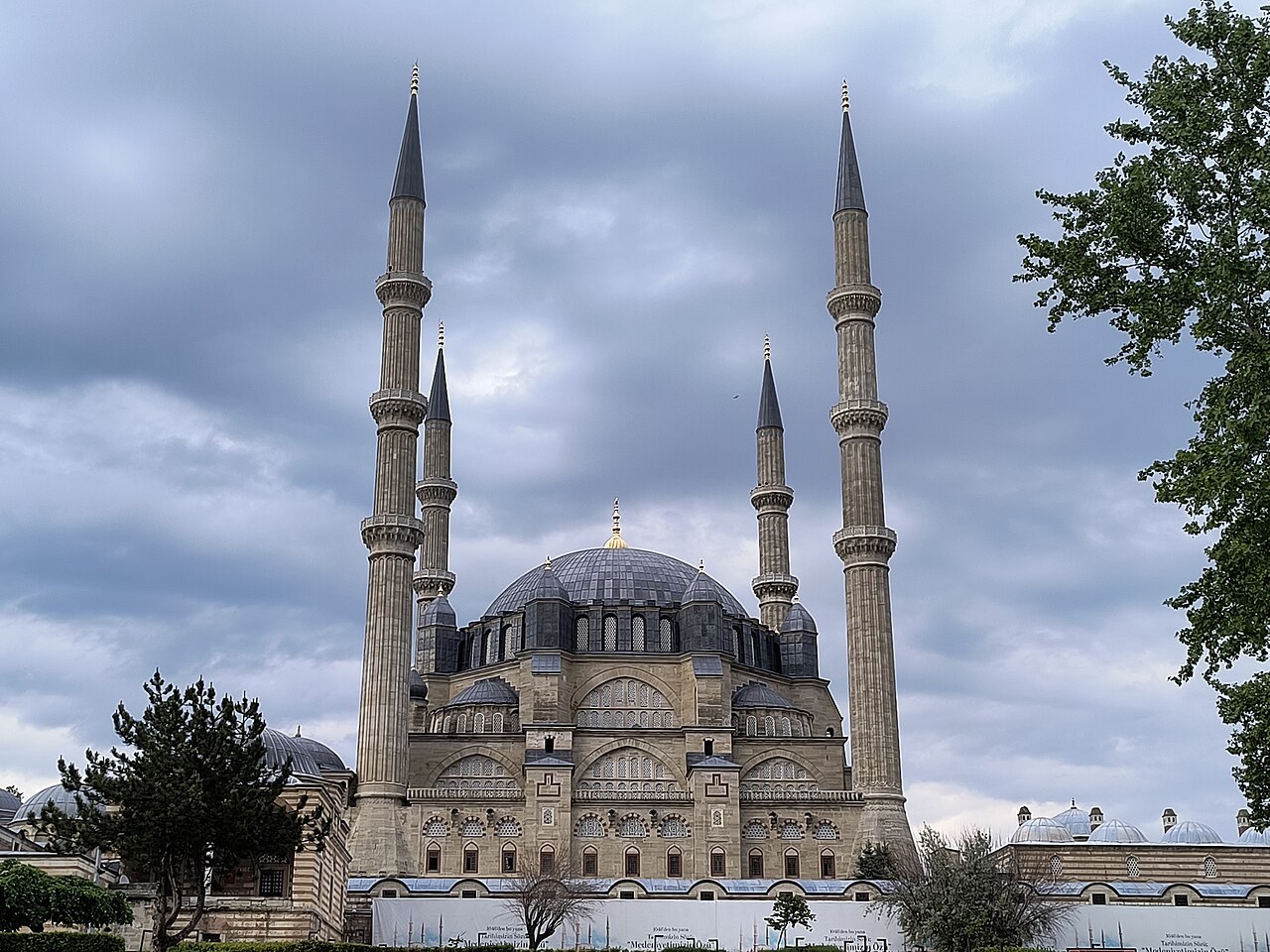
Sinan, a Christian-born recruit who rose through the Janissaries to become the sultan's chief architect, designed more than three hundred buildings. His career is an escalation: the Şehzade as apprenticeship, the Süleymaniye as journeyman work, the Selimiye at Edirne — his own words — as the masterpiece.
The pictured Selimiye (1568–1574) sets its dome on eight piers in a single unbroken space, the mihrab lit like a stage: Ottoman architecture's answer to Hagia Sophia, built a thousand years after it.
References
Related Across the Site
- Brihadeeswara Temple Art Entry — Rajaraja Chola's temple at Thanjavur (completed 1010): a granite mountain of sculpture raised over one of India's great lingas, and the Chola bronze tradition's home ground.
- Hagia Sophia Art Entry — Justinian's great church in Constantinople (532–537), whose dome seemed to contemporaries to hang from heaven — and whose mosaics record, in one building, icon, iconoclasm, conquest, museum, and mosque.
- The Dome of the Rock Art Entry — The oldest surviving monument of Islamic architecture (Jerusalem, 691–692): a shrine of mosaic, marble, and inscription, whose entire decorative program argues aniconism's positive case.
- The Golden Temple Art Entry — A gilded sanctum standing in the middle of a sacred pool, reached by one causeway and entered by doors on all four sides — open to every direction and every caste.
- The Mughal Court Miniature Art Entry — The figural painting of the Mughal emperors' atelier — hunts, audiences, lovers, and saints in jewel-like detail — standing as the descriptive practice beside Islam's normative aniconism.
- Fariborz Sahba Artist — The Iranian-Canadian architect of the Lotus Temple in New Delhi and of the Bahá'í terraces on Mount Carmel.
- Kamal ud-Din Behzad Artist — The master of the Timurid miniature, head of the royal atelier at Herat, whose building sites, gardens, and crowds set the Persian standard.
- Riza-i Abbasi Artist — The Safavid court painter who turned the Persian miniature toward the single figure — youths, lovers, and readers alone on the page.