

Religious Art & Worldviews · Artists
The Colombian sculptor of political violence's traces — her Fragmentos floor in Bogotá is a counter-monument hammered from surrendered weapons by women victims of the conflict.
Tagged: Sculpture Contemporary Commemorative Prophetic/Critical Counter-Monument Secular and Non-Theistic
Salcedo's work gives form to absence: furniture choked with concrete, a crack run through a museum floor, a square's worth of chairs lowered down a palace wall. She interviews victims and builds from their testimony, and the work refuses illustration.
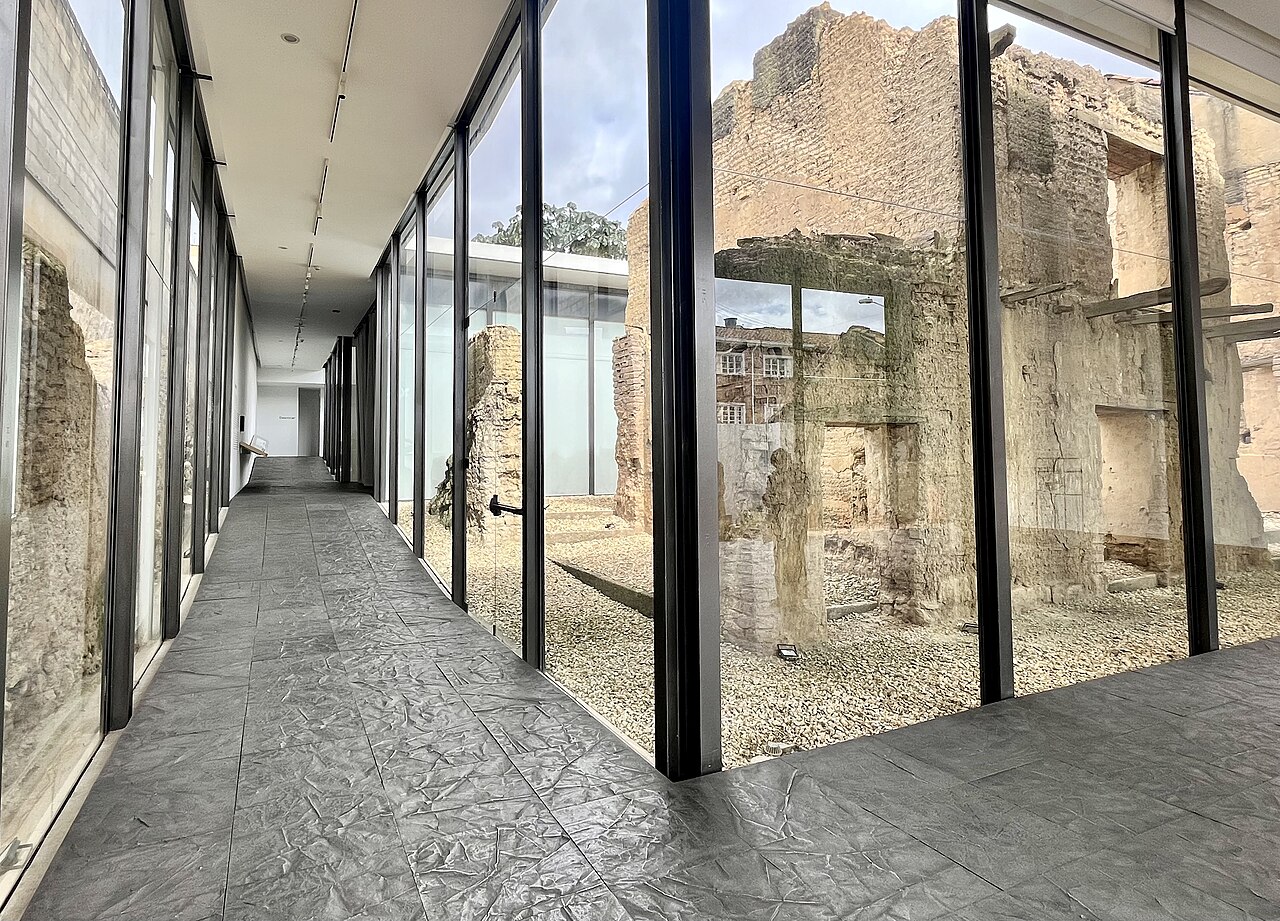
The pictured Fragmentos (2018) floors a gallery with tiles cast from melted FARC weapons, their surfaces hammered by women who survived sexual violence in the war — a memorial meant to be walked on, in silence, above a void.
References
Related Across the Site
- AI-Generated Religious Art Art Entry — Image generators now produce Christs, Buddhas, and temple scenes on demand. The traditions are answering — some with welcome, some with prohibitions that reach the new medium directly. This page shows no generated image, because any single example would misrepresent the argument.
- Northwest Coast Formline and the Crest Pole Art Entry — A visual grammar of ovoids and U-forms that writes family crests in cedar — the pole at Brockton Point, carved by Ellen Neel, stands in public where its predecessors have stood since the 1880s.
- The Fravahar Art Entry — A bearded figure in a winged disc, carved over temple doors and printed on calendars from Mumbai to Toronto — the Zoroastrian emblem whose original meaning scholars still argue about.
- The Ganesh Chaturthi Murti Art Entry — A clay Ganesh, modeled and painted by neighborhood artisans, worshipped in streets and homes for up to eleven days, then carried in procession and immersed: the murti as a guest who is honored and bid farewell.
- The Great Stupa at Sanchi Art Entry — The oldest stone stupa in India, begun under Ashoka and crowned with four carved gateways: the reliquary mound as Buddhism's first monumental art, and its first aniconic center.
- The Shiva Linga Art Entry — A polished stone shaft rising from its base, bathed daily in water, milk, and flowers: the aniconic murti of Shiva, worshipped not as a symbol of an absent god but as the god's own form.
- Bill Reid Artist — The Haida master carver and jeweler whose Raven and the First Men brought the monumental carving tradition back to full strength.
- Käthe Kollwitz Artist — The German artist of grief: her Pietà, enlarged in Berlin's Neue Wache, is Germany's central memorial to the victims of war — a mother holding her dead son, made by a mother who lost hers.