

Religious Art & Worldviews · Artists
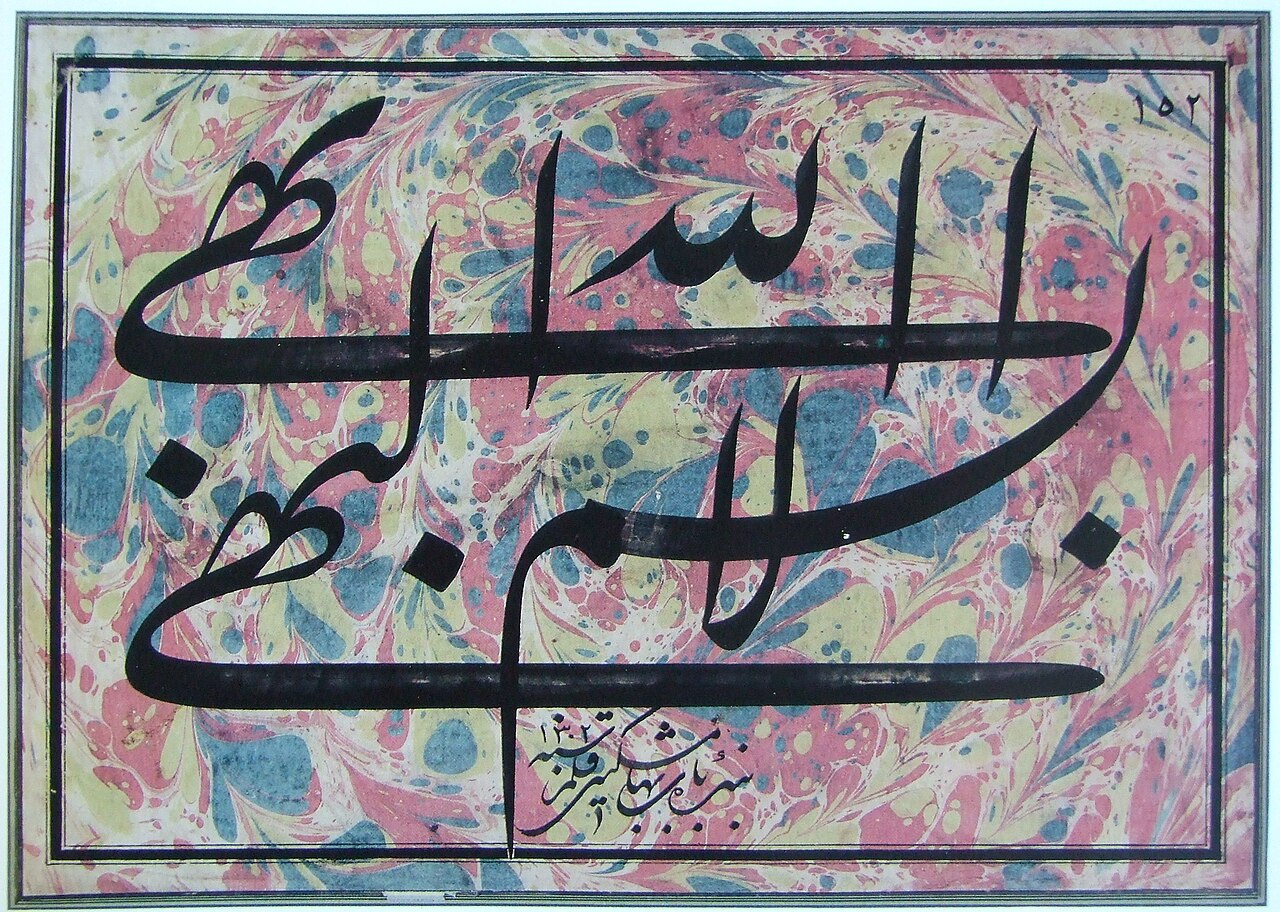
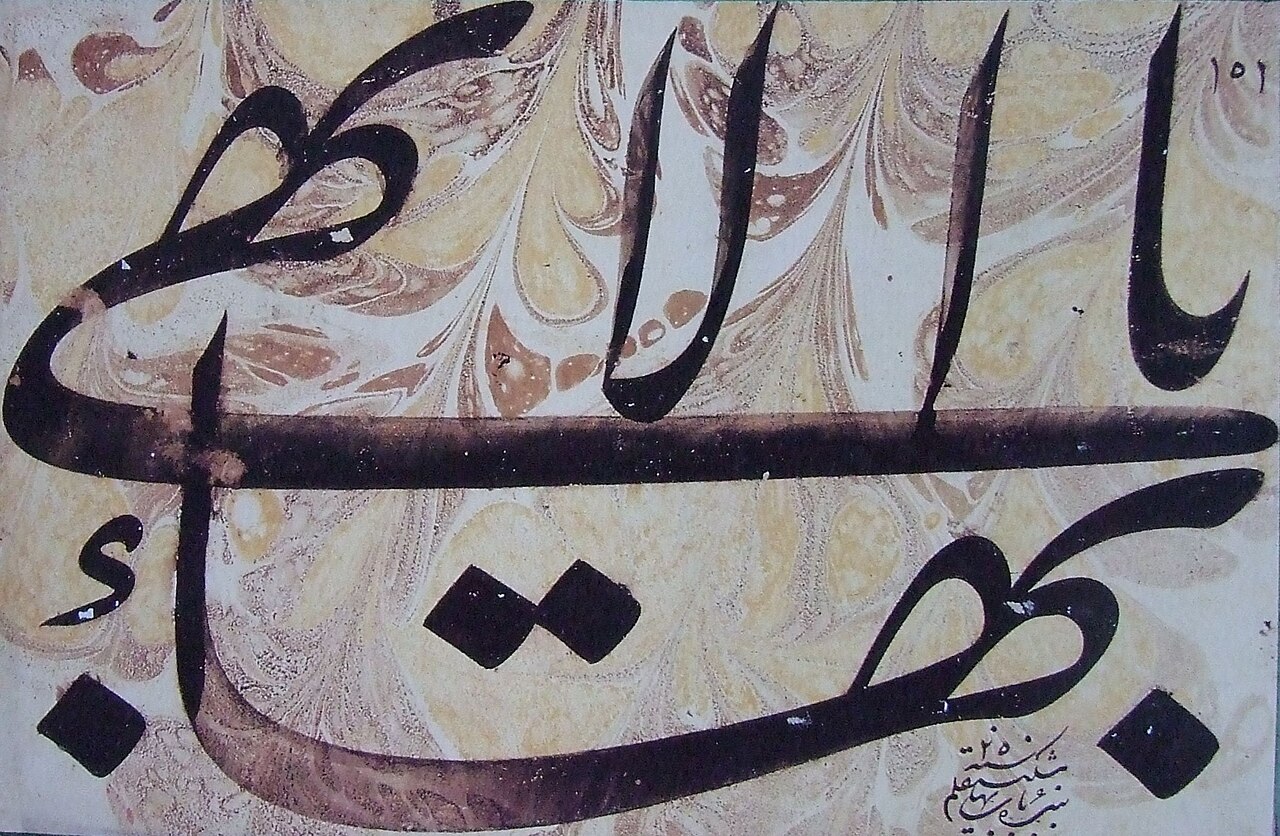
The Bahá'í master calligrapher whose rendering of the Greatest Name became the faith's most reproduced image — a word, beautifully written, in place of a face.
Tagged: Calligraphy Modern Devotional Aniconic (Calligraphic/Geometric) Bahá'í
Aqa Husayn, called Mishkin-Qalam — musk-scented pen — was calligrapher to princes before his conversion cost him his post and sent him into exile with Bahá'u'lláh. At Akka he became the young faith's defining penman.
His interlaced Greatest Name, an entry in this section, is reproduced on rings, pendants, and walls worldwide: the Bahá'í answer to the icon, executed by its greatest calligrapher.
Works in This Section
References
Related Across the Site
- A Kufic Qur'an Folio Art Entry — A parchment leaf of an Abbasid Qur'an in angular Kufic script, its verse endings touched with gold: the page as the supreme religious image of an aniconic faith.
- Potlatch Masks — Image Withheld Art Entry — Masks danced at the potlatch open and transform as the ancestor arrives. This page shows no image: the masks are community-governed regalia, and their photographs are published here only with the owning community's consent, which has not been sought for specific pieces.
- The Greatest Name in Calligraphy Art Entry — The Bahá'í invocation rendered as calligraphy by Mishkin-Qalam, the tradition's master penman — the sacred name made visible as pattern, in a faith that declines to depict its Manifestations.
- The Lotus Temple Art Entry — A white marble lotus of twenty-seven petals, open to all, in which no sermon is preached and no image hangs — only the scriptures of the world's religions are read and sung.
- The Yazd Fire Temple Art Entry — A temple in Yazd whose sacred fire has been kept burning, by the tradition's account, since about 470 CE — carried from shrine to shrine across fifteen centuries and tended daily behind glass.
- Ibn Muqla Artist — The Abbasid vizier who gave Arabic writing its proportional system — the calligrapher's geometry on which a thousand years of Qur'an copying rests.
- Marc Chagall Artist — The Jewish painter of Vitebsk who carried the shtetl, the Torah, and the crucified Jesus of Jewish suffering into modern art. Shown in a 1941 photograph; his paintings remain in copyright.
- Moritz Daniel Oppenheim Artist — Called the first Jewish painter of the modern era: his Scenes from Traditional Jewish Family Life gave emancipated German Jewry its self-portrait.