

Religious Art & Worldviews · Artists
Called the first Jewish painter of the modern era: his Scenes from Traditional Jewish Family Life gave emancipated German Jewry its self-portrait.
Tagged: Painting Modern Devotional Iconic Jewish Genre Painting Jewish
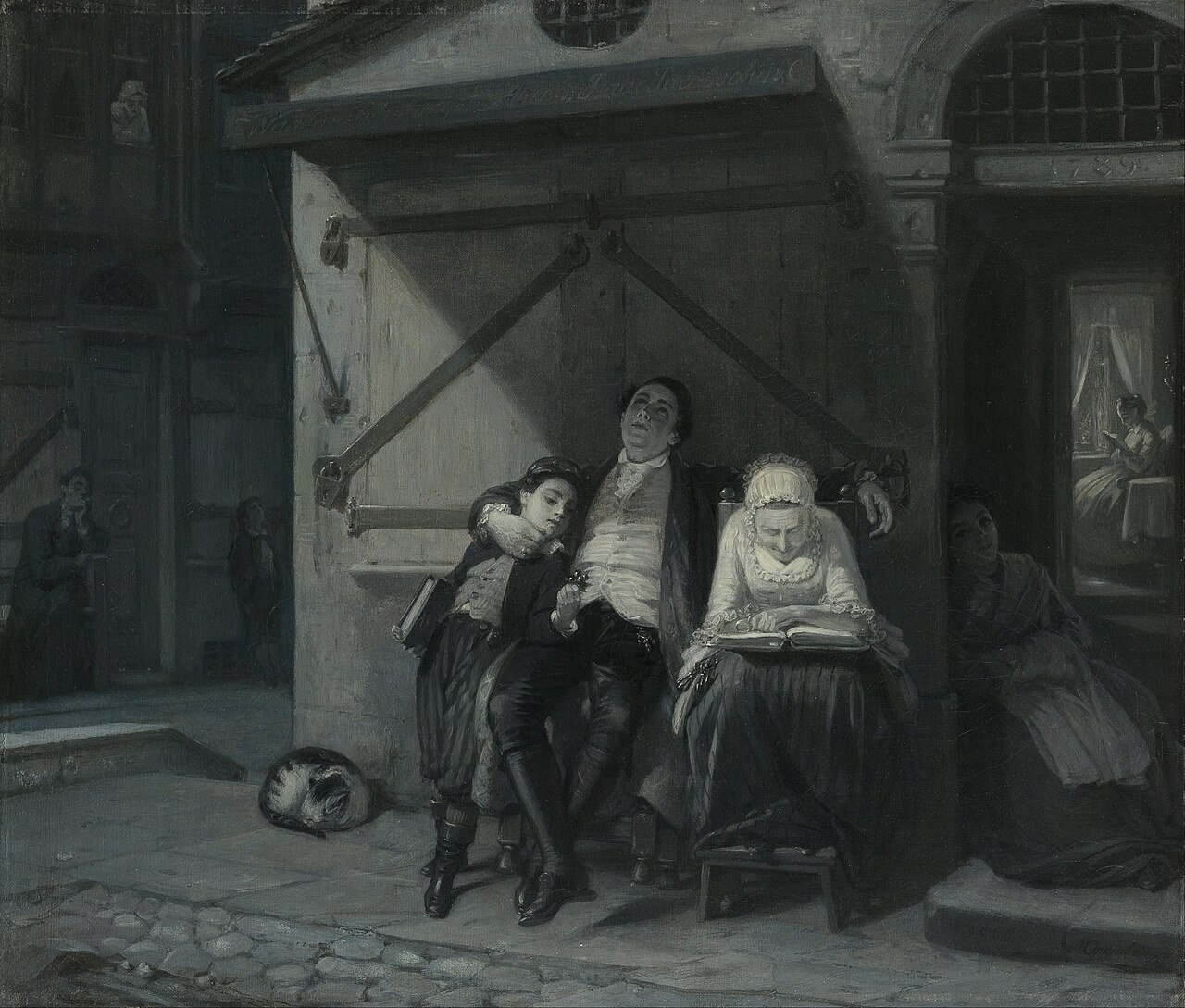
Oppenheim painted for the Rothschilds and for the Jewish middle class that was entering German society while keeping the Sabbath table at home. His genre scenes — the Friday night blessing, the examination of the schoolboy — are deliberately unheroic: tradition as domestic dignity.
The pictured Sabbath Rest belongs to that series, which circulated as prints through Jewish homes across Europe and America.
References
Related Across the Site
- Rublev's Trinity Art Entry — Andrei Rublev's icon of the three angels at Abraham's table (c. 1411), painted for the Trinity Lavra of St. Sergius — the supreme achievement of Orthodox icon painting and its theology made visible.
- The Good Shepherd of the Catacombs Art Entry — A young shepherd carrying a lamb across his shoulders, painted and carved across the Roman catacombs: the earliest Christian image of Christ, chosen as a symbol before it was a portrait.
- Andrei Rublev Artist — The monk-iconographer whose Trinity became the measure of the Russian icon: stillness, humility, and gold held in perfect balance.
- Fra Angelico Artist — The Dominican friar whose frescoes for his brothers' cells at San Marco were painted as instruments of prayer, one mystery per monk.
- Giotto di Bondone Artist — The Florentine who gave biblical figures weight, grief, and ground to stand on — the hinge between medieval symbol and Renaissance story.
- Marc Chagall Artist — The Jewish painter of Vitebsk who carried the shtetl, the Torah, and the crucified Jesus of Jewish suffering into modern art. Shown in a 1941 photograph; his paintings remain in copyright.
- Raja Ravi Varma Artist — The painter who put the gods on the bazaar wall: his oleographs of Lakshmi, Saraswati, and the epics made divine images a part of every Indian home.
- Sobha Singh Artist — The Punjabi painter whose portraits of the Gurus hang in a million homes — shown here, by the rules of his own tradition's guidance, as himself: a 1985 photograph of the artist.