

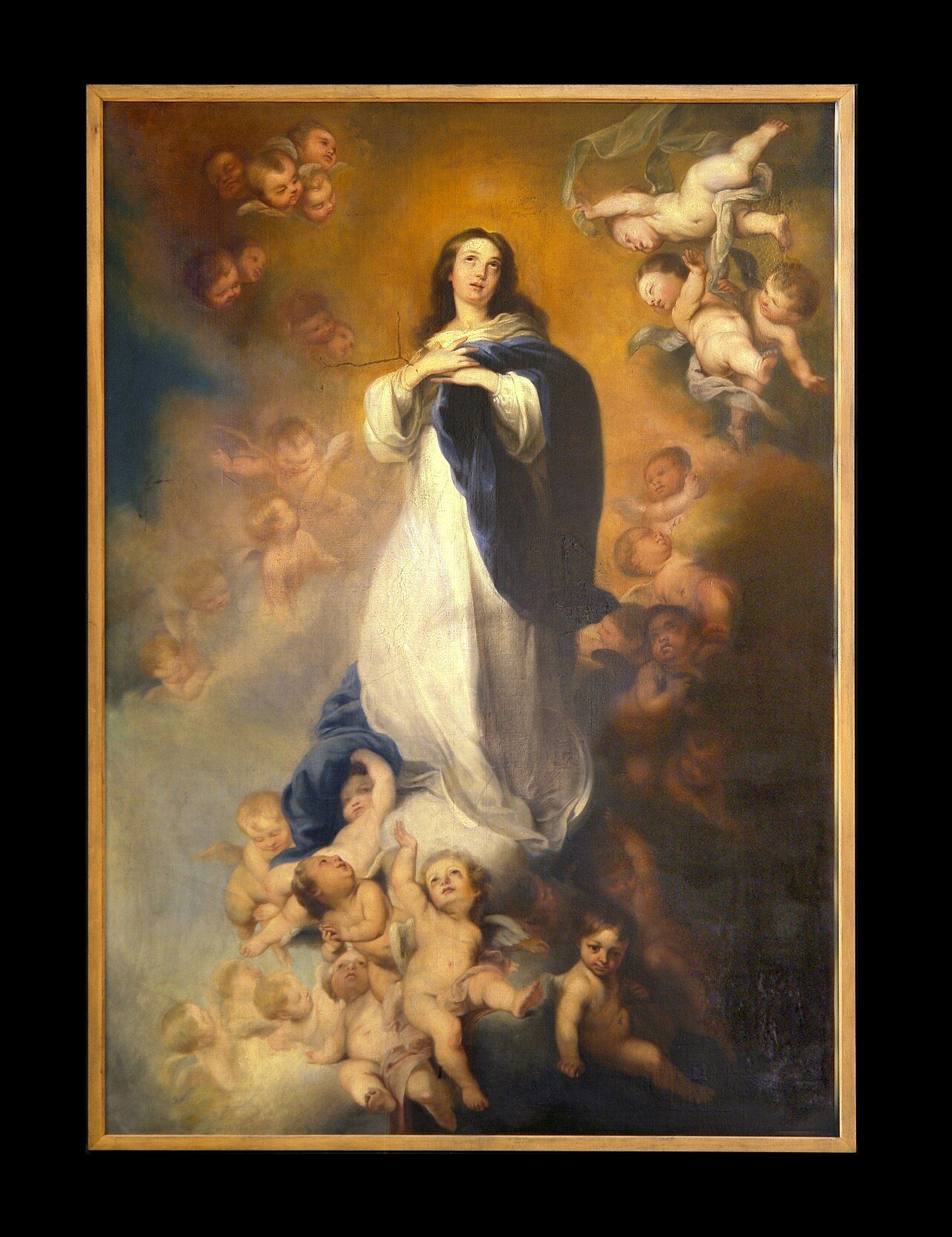
The Church that built the universities and the calendar also maintains the most articulated magisterial positions on new science: evolution accepted with a reserve about the soul, embryos protected from conception, somatic therapy welcomed and germline intervention refused.
Tagged: Catholic
The Catholic Church is the tradition with the longest continuous institutional relationship with organized science: it founded and funded universities, ran the calendar reform of 1582, built observatories (the Vatican Observatory, founded 1581 and refounded 1891, is among the oldest astronomical institutions in the world), and staffs the Pontifical Academy of Sciences, whose members need not be Catholic and have included dozens of Nobel laureates.
Its doctrinal frame is the two-books settlement in magisterial form. Humani generis (1950) permitted research into the evolution of the human body while reserving the soul’s immediate creation; John Paul II’s 1996 message to the Academy called evolution ‘more than a hypothesis’ while maintaining that reservation. The Galileo case stands as the tradition’s own admitted failure of governance — John Paul II’s 1992 address closed the commission of study by acknowledging errors by the theologians and judges of 1633 — and is cited inside the tradition whenever a new science arrives.
In bioethics the Church’s positions are the most systematically developed of any tradition’s: Donum vitae (1987) and Dignitas personae (2008) govern embryos, IVF, and germline intervention from a doctrine of the person from conception, and the same framework produces distinctive stances — permissive toward somatic gene therapy, opposed to germline modification and cloning — that are registered technology by technology in this section.
Recorded Stances in the Register
Anesthesia in childbirth and surgery Embraced
Catholic moral theology received anesthesia under the ordinary principle that relieving pain is a good; Pius XII’s 1957 address on anesthesia gave the tradition’s considered form: patients may refuse or accept, doctors may administer, and the relief of pain is not an evasion of any duty to suffer.
Artificial intelligence Regulated
The Rome Call for AI Ethics (2020) binds signatories to transparency, inclusion, responsibility, impartiality, reliability, and privacy — an ‘algorethics’ in the drafters’ word — and Leo XIV took artificial intelligence as a defining concern of his pontificate from its first days, naming AI in continuity with Leo XIII’s answer to the industrial revolution. The refusal point is anthropological: a system may simulate a person; it may not be granted a person’s place.
Blood transfusion Embraced
Transfusion is ordinary medicine: blood is a tissue gift, and its donation is commended as charity. The Catholic discussion concerns consent and minors, where courts and ethicists divide along lines shared with every other tradition that accepts the treatment.
Contraception Condemned
Humanae vitae (1968) holds every conjugal act must remain open to life: artificial contraception is refused as a separation of the act’s unitive and procreative meanings, while periodic abstinence (and its modern fertility-awareness forms) is permitted as a use of the cycle God built. The dissent of Catholic theologians and the non-reception by much of the laity are part of the recorded history.
Embryonic stem cell research Condemned
The embryo is a human subject from conception (Evangelium vitae, §63): research that kills it is refused absolutely, while adult and induced stem cell research is welcomed and Church-funded — the tradition’s position is a fork, not a wall.
Evolution by natural selection Selectively adopted
The magisterium permits research and teaching on the evolution of the body (Humani generis, 1950) and John Paul II called the theory ‘more than a hypothesis’ in 1996, while reserving the direct creation of each soul and rejecting materialist readings that make humanity an accident without meaning. Evolution as biology: accepted. Evolution as total philosophy: refused.
Germ theory of disease Embraced
Germ theory was embraced through the Church’s hospital and mission systems; no doctrine of disease as direct divine punishment stood in official teaching, and the older devotional language of sickness as trial continued alongside, not against, the laboratory account.
Germline gene editing Regulated
Dignitas personae (2008) distinguishes somatic therapy — in principle licit — from germline intervention, which it refuses: the genetic patrimony of a person not yet existing may not be disposed of by others, and editing that risks the embryo’s life or identity treats a person as a product. Enhancement editing is refused on the same ground plus the justice of access.
Heliocentric astronomy Contested within the tradition
The Church that condemned Galileo’s advocacy in 1633 had received Copernicus’s dedication in 1543 and employed heliocentrists’ mathematics in the calendar reform. The institutional record runs from patronage through disciplinary error to formal acknowledgment: the 1992 address of John Paul II closed the case by naming the theologians’ mistake — treating a contested cosmology as a matter of faith.
Human reproductive cloning Condemned
Cloning is refused as a manufacturing of human life contrary to the dignity of procreation (Dignitas personae, §28): the clone is designed to a specification, and a person may not be made to another’s blueprint.
In vitro fertilization Condemned
Donum vitae (1987) refuses IVF even between spouses, on two grounds: the embryo is a person to be protected from conception, and procreation is inseparable from the conjugal act — a child is to be begotten, not manufactured. The Church simultaneously funds research into treating infertility by other means and receives IVF children, of course, without distinction.
Industrial agriculture Contested within the tradition
Laudato si’ treats industrial agriculture under the technocratic paradigm: efficient and corrosive where it treats soil, water, and rural communities as inputs. The encyclical commends small-scale, diversified farming and the peasant agriculture of the poor as the system’s standing alternative — a position, not a nostalgia.
Nuclear power Contested within the tradition
The magisterium has issued no binding condemnation of civilian nuclear power; the question is treated prudentially under stewardship and the safety owed to neighbors and descendants, with bishops’ conferences of affected countries (Japan after 2011, Germany) pressing for phase-outs their universal Church has not mandated.
Nuclear weapons Condemned
The tradition moved: indiscriminate destruction was condemned absolutely at Vatican II, deterrence was tolerated in 1982 only as a step toward disarmament, and in 2017 Francis condemned possession itself. The Church ratified the Treaty on the Prohibition of Nuclear Weapons as the Holy See (2017) — among the first states to do so.
Organ transplantation Regulated
Donation is praised as an act of love and solidarity (Evangelium vitae, §86; John Paul II’s 2000 address), conditioned on the donor’s certain death and free consent; the Church accepts the neurological criterion applied with rigor while continuing to examine its philosophical edges, and refuses organ commerce absolutely.
Space exploration Embraced
The Vatican Observatory’s astronomers are the institutional answer: exploration is received as knowledge of the creation, and John Paul II’s 1988 observatory letter treats the enterprise without anxiety. The Apollo 8 Genesis reading was an act of the crew, not of any church — the register insists on the difference.
Surgical and medical abortion Condemned
Direct abortion is refused absolutely: the embryo is a human life from conception, ‘you shall not murder a child by abortion’ (Didache 2) is the tradition’s oldest sentence on the subject, and Evangelium vitae (§§58–63) states the position in its fullest form. Indirect effects under double-effect reasoning (treatment of ectopic pregnancy by salpingectomy and like cases) are distinguished and permitted.
The internet and social media Regulated
The Church built into the network early (the Vatican’s site, 1995; the first papal tweet, 2012) and regulates its own use by communications ethics — truthfulness, dignity, the refusal of outrage economics — restated for the platform era in the Dicastery for Communication’s Towards a Full Presence (2023).
The printing press Regulated
Print was both weapon and threat: the Church licensed presses, printed its own case prodigiously, and answered uncontrolled books with the Index (1559–1966) — a regulation regime, not a refusal of the medium, which its missions carried to Mexico, Goa, Manila, and Beijing.
The telescope Embraced
The Church’s own astronomers were among the first to confirm Galileo’s observations, and the Collegio Romano celebrated them; the instrument itself was never condemned. What Rome policed was a conclusion and an exegesis, not the device — a distinction the conflict story habitually erases.
Vaccination Embraced
Vaccination is received as ordinary preventive medicine. The 2005/2017 rulings on abortion-derived cell lines permit use under protest where no alternative exists, grading the cooperation as remote and the duty to protect life — especially children’s — as immediate.
References
- John Paul II, Address to the Pontifical Academy of Sciences (1996)
- Congregation for the Doctrine of the Faith, Dignitas personae (2008)
Related Across the Site
- Catholic Culture Library — An online library, dictionary, and document search representing more than 2,000 years of Catholic scholarship and teaching.
- Clerus.org / BIBLIACLERUS Library — The electronic library of the Congregation for the Clergy: the Bible in many languages with commentaries, and the documents of the Church.
- Corpus Thomisticum Library — The complete works of St. Thomas Aquinas, with manuscripts, bibliography, and research tools for Thomistic study.
- FORMED Library — A Catholic streaming platform with video studies, movies, audio programs, and ebooks, offered by subscription through parishes and directly.
- Verbum Library — A Catholic digital library with interactive study tools and packaged collections of Scripture, the Fathers, and Catholic scholarship.
- Glory Be (Gloria Patri) Prayer or Creed — A short doxology praising the Father, Son, and Holy Spirit, used across Catholic, Orthodox, and Protestant worship.
- Hail Mary Prayer or Creed — A prayer to the Virgin Mary built from the angel's greeting in Luke 1, asking for her intercession.
- The Catholic World View World View — Catholic Christianity confesses one triune God and receives his revelation through Scripture and Tradition, guarded by the Church Christ founded and its apostolic teaching office.