

The mechanism that reorganized biology: embraced, adapted, and fought over — usually inside traditions rather than between them, from Asa Gray’s theistic evolution to today’s divided evangelical house.
Tagged: Biology and evolution Buddhist Catholic Hindu Jewish
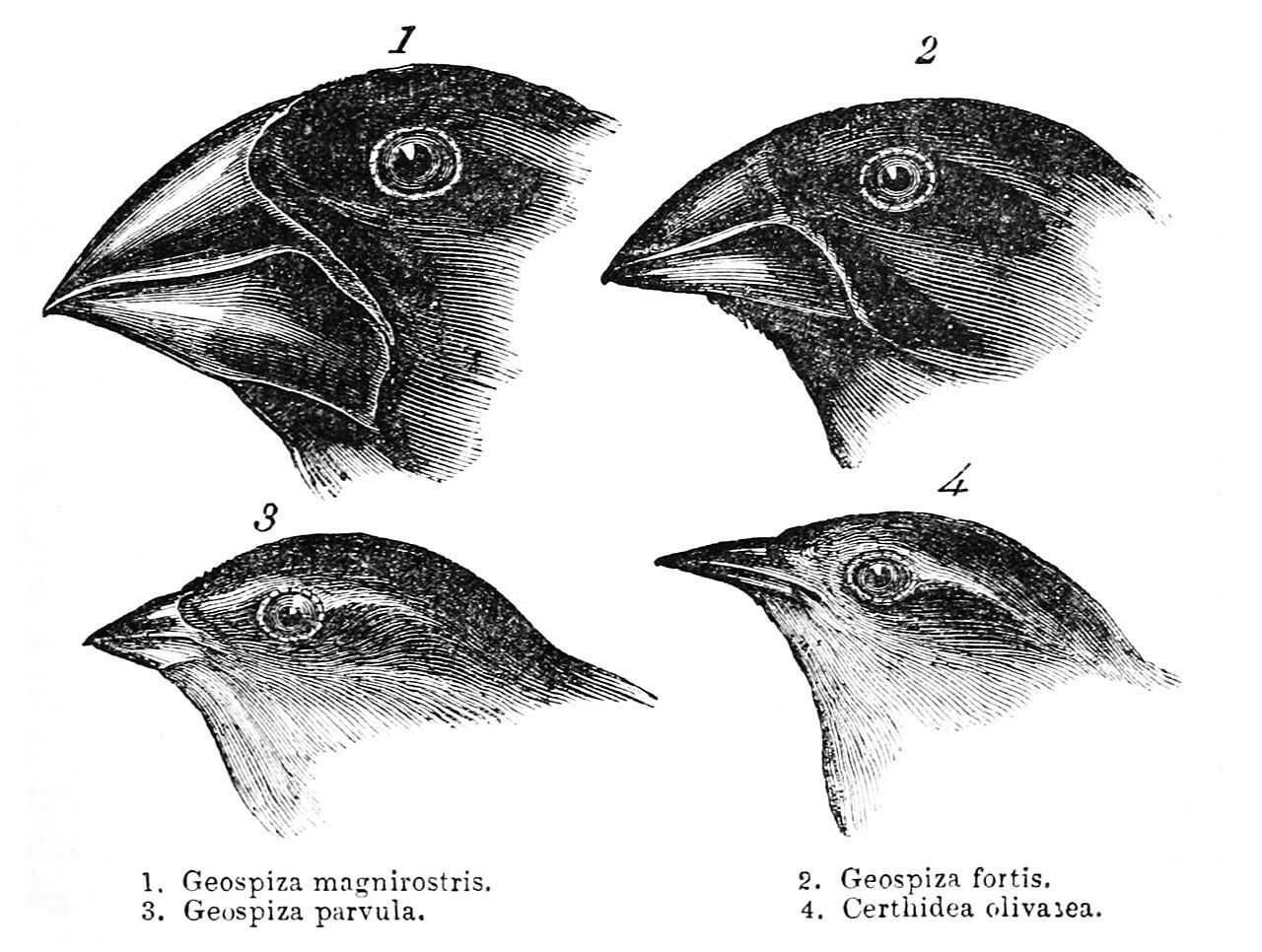
Darwin’s mechanism — descent with modification sorted by natural selection — reorganized biology around common ancestry and deep time. The first generation’s responses were mixed in every camp: Darwin’s American champion Asa Gray was an orthodox Presbyterian who read selection theistically; the Anglican Charles Kingsley wrote to Darwin that a God who makes things make themselves was the nobler conception; Samuel Wilberforce’s objections were scientific as much as theological; and Darwin was buried, with the Church of England’s honors, in Westminster Abbey. The polarized ‘war’ was assembled later.
The Stance Register
Each stance is recorded with its rationale in the tradition's own terms and its sources. Where a tradition argues with itself, the register says so.
Buddhist Selectively adopted
Impermanence and dependent origination fit an evolving cosmos without strain, and the Dalai Lama accepts the biology; the points of friction are karma and rebirth, which Buddhist authorities treat as outside the laboratory’s remit rather than as contradicted by it.
- Donald S. Lopez Jr., Buddhism and Science (2008)
Catholic Selectively adopted
The magisterium permits research and teaching on the evolution of the body (Humani generis, 1950) and John Paul II called the theory ‘more than a hypothesis’ in 1996, while reserving the direct creation of each soul and rejecting materialist readings that make humanity an accident without meaning. Evolution as biology: accepted. Evolution as total philosophy: refused.
- Pius XII, Humani generis (1950)
- John Paul II, Message to the Pontifical Academy of Sciences (1996)
Evangelical Contested within the tradition
The tradition is publicly divided: young-earth creationism (consolidated after 1961), old-earth and intelligent-design positions, and evolutionary creation (BioLogos) all claim the evangelical name, and all cite Scripture as their warrant. The register records the division rather than an average of it.
- Ronald L. Numbers, The Creationists (expanded ed., 2006)
Hindu Reinterpreted
Cyclical cosmologies and the transmigration of souls made descent and transformation familiar categories; Hindu teachers from the nineteenth century onward have commonly mapped evolution onto the unfolding of consciousness, while reading the mechanism theistically or as līlā, divine play.
- C. Mackenzie Brown, Hindu Perspectives on Evolution (2012)
Islamic Contested within the tradition
Qur’anic creation language and the Adam narrative generate a genuine spread: scientific exegesis that reads evolution into the text, an Adam-exception model (evolved humanity, specially created Adam), widespread popular creationism (the Harun Yahya literature), and working Muslim biologists who accept the theory entire. The fiqh academies have not issued a single binding line.
- Muzaffar Iqbal, Islam and Science (2002)
Jewish Embraced
Under Maimonides’ rule, a demonstrated natural history governs reading: most Jewish authorities across the denominations accept evolution, with parts of Orthodoxy dissenting on human origins or on the age of the world. No central Jewish body has condemned the theory.
- Moses Maimonides, Guide for the Perplexed, II.25
Mainline Protestant Embraced
Mainline seminaries and study documents receive evolution as the established account of life’s history and re-read doctrines of creation and providence accordingly; the debate inside these churches is about the theology, not the biology.
- ELCA, Genetics, Faith and Responsibility (2011)
Orthodox Contested within the tradition
Orthodox responses range from theistic evolution taught without alarm in the theological faculties to creationist currents fed by some monastic and imported literature; the mainstream holds the biology while guarding the doctrine that humanity bears God’s image, which it does not treat as a biological claim.
- Elizabeth Theokritoff, Living in God’s Creation (2009)
See this register as a side-by-side comparison
References
- James R. Moore, The Post-Darwinian Controversies (1979)
- David N. Livingstone, Darwin’s Forgotten Defenders (1987)
Related Across the Site
- Artificial intelligence and human dignity Flashpoint — Learning systems that counsel, accompany, and target: the live question is not machine consciousness but what may never be delegated — and every tradition on this site answers that accountability stays with persons.
- Gene editing and the germline Flashpoint — Easy technique, unconsenting subject, speculative benefit: the 2018 edited babies drew one condemnation in many vocabularies, and the line between somatic therapy and germline design is now the field’s governing border.
- Transhumanism and the body Flashpoint — Mortality as an engineering backlog: lifespan, cognition, and the body as a draft to be revised — and the counter-question, asked in every dialect on this site, whether a self indefinitely revisable remains a self.
- St Andrews Encyclopaedia of Theology Library — An open-access, multi-author theological reference with advanced articles on Christianity, Judaism, Islam, Hinduism, and Buddhism.
- Contemporary Science Era — CRISPR, consumer genomics, machine intelligence, and a warming climate: the live questions now arrive as engineering deadlines, and the traditions answer them divided within themselves as much as between one another.
- Twentieth Century Science Era — Relativity, quantum theory, and a priest’s Big Bang; war made science a state enterprise and the scientist’s conscience a public problem; creation-evolution litigation defined the American quarrel while genetics under Lysenko showed the cost of policing conclusions.
- Germline gene editing Technology — The technology every framework was waiting for: Rome refuses it, the responsa and the fiqh academies condition it, Hindu and Buddhist evaluations run on intention — and the academies of science govern it while disagreeing about whether it should ever be used.
- Surgical and medical abortion Technology — The register’s most documented case: refused absolutely by Rome and by the evangelical mainstream, governed by ensoulment in the classical fiqh, divided in the responsa by stage and by the mother’s priority, grave in Buddhist and Hindu ethics — each in its own premises, left standing.