

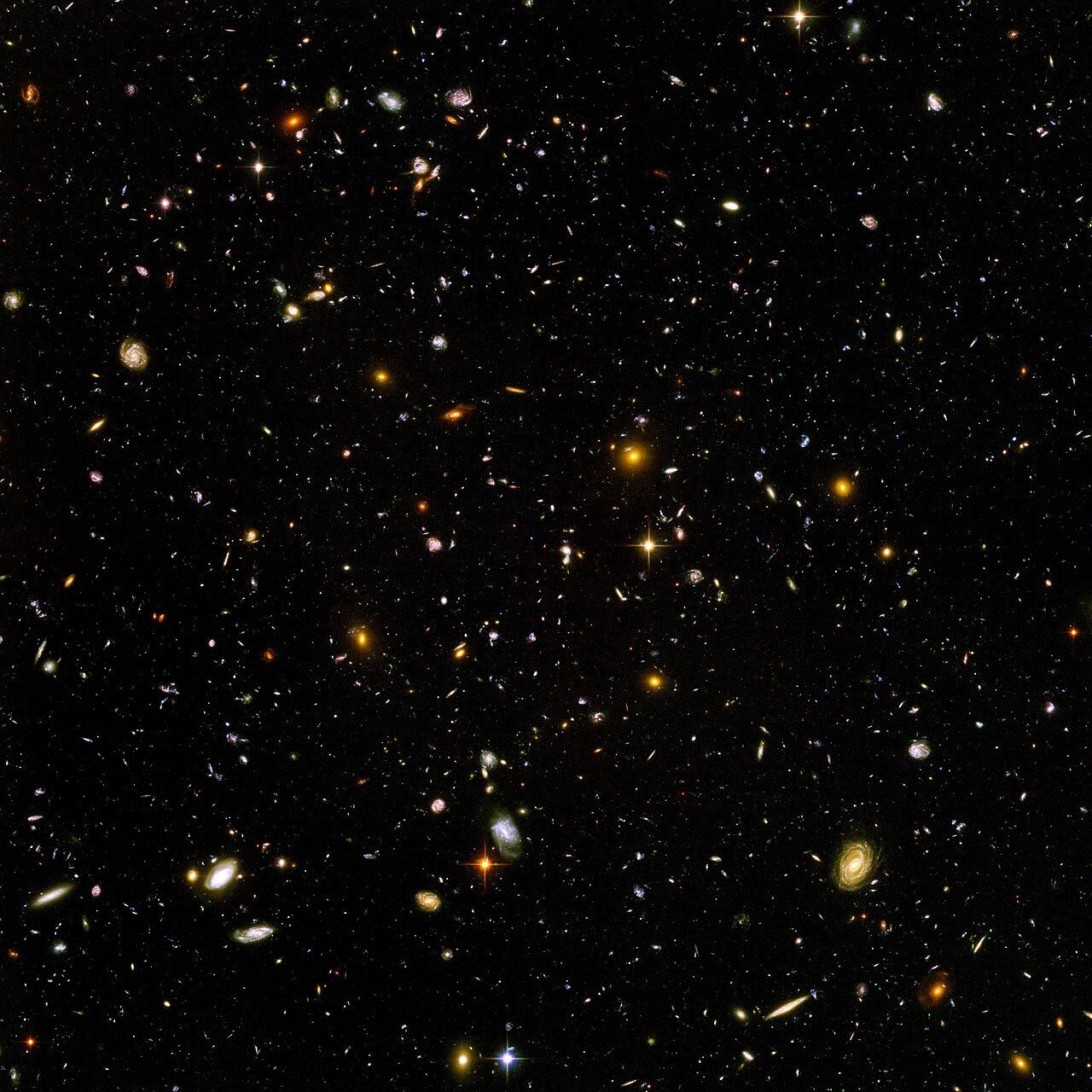
The earth seen whole: Genesis read from lunar orbit by a government crew, an observatory older than the telescope age blessing the enterprise, and the pale blue dot preached as a secular sermon on humility.
The Apollo program made the earth photographable and, in the famous unintended consequence, made it look fragile and single. Religious responses were immediate and divided — from the Apollo 8 crew’s Genesis reading on Christmas Eve 1968 (a government crew, a lawsuit by Madalyn Murray O’Hair, and a permanent place in the liturgy of the event) to the traditions for whom the heavens were never a separate country to visit.
The Stance Register
Each stance is recorded with its rationale in the tradition's own terms and its sources. Where a tradition argues with itself, the register says so.
Catholic Embraced
The Vatican Observatory’s astronomers are the institutional answer: exploration is received as knowledge of the creation, and John Paul II’s 1988 observatory letter treats the enterprise without anxiety. The Apollo 8 Genesis reading was an act of the crew, not of any church — the register insists on the difference.
- John Paul II, Letter to the Director of the Vatican Observatory (1988)
Secular and naturalist Embraced
Secular space advocacy speaks its own theological-adjacent language — Sagan’s ‘pale blue dot’ as a sermon on humility — and the naturalist establishment treats exploration as the species’ proper work, while its internal critics price the same rockets against the earth’s needs.
- Carl Sagan, Pale Blue Dot (1994)
See this register as a side-by-side comparison
References
- Apollo 8 Christmas Eve broadcast transcript (1968)
- James S. J. Schwartz, The Value of Science in Space Exploration (2020)
Related Across the Site
- Catholic Culture Library — An online library, dictionary, and document search representing more than 2,000 years of Catholic scholarship and teaching.
- Clerus.org / BIBLIACLERUS Library — The electronic library of the Congregation for the Clergy: the Bible in many languages with commentaries, and the documents of the Church.
- Corpus Thomisticum Library — The complete works of St. Thomas Aquinas, with manuscripts, bibliography, and research tools for Thomistic study.
- FORMED Library — A Catholic streaming platform with video studies, movies, audio programs, and ebooks, offered by subscription through parishes and directly.
- Verbum Library — A Catholic digital library with interactive study tools and packaged collections of Scripture, the Fathers, and Catholic scholarship.
- Hail Mary Prayer or Creed — A prayer to the Virgin Mary built from the angel's greeting in Luke 1, asking for her intercession.
- Contemporary Science Era — CRISPR, consumer genomics, machine intelligence, and a warming climate: the live questions now arrive as engineering deadlines, and the traditions answer them divided within themselves as much as between one another.
- The Catholic World View World View — Catholic Christianity confesses one triune God and receives his revelation through Scripture and Tradition, guarded by the Church Christ founded and its apostolic teaching office.