

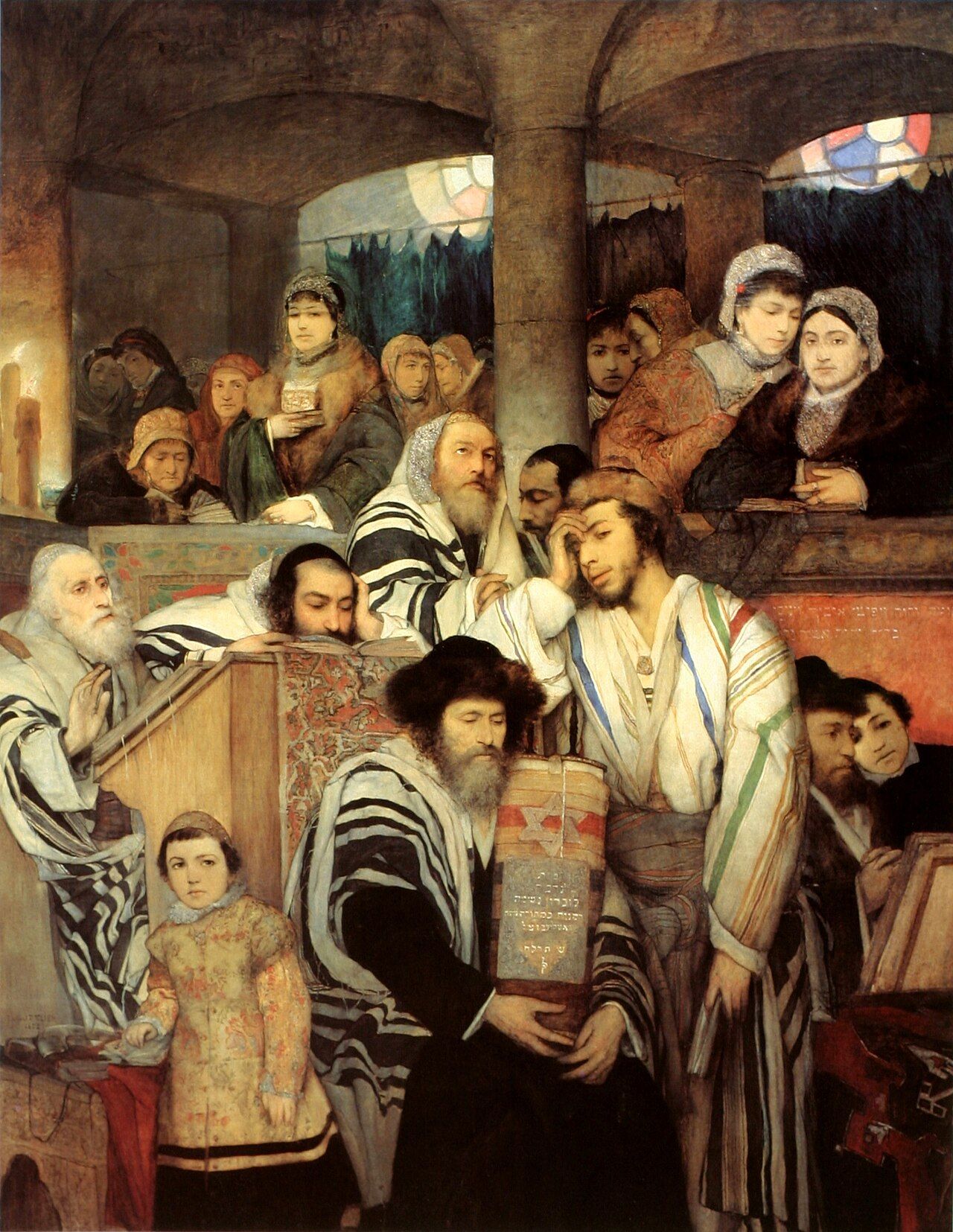
The Sabbath as the first technology rule; a responsa tradition that answers new medicine case by case under pikuach nefesh, the saving of life; and a Maimonidean rule for cosmology — if the demonstration holds, reinterpret the text.
Tagged: Jewish
Judaism’s oldest technology tradition is the Sabbath: one day in seven on which the world is not made, mended, or bought — a standing institutional proof that a community can govern its tools absolutely when it chooses. Modern Jewish bioethics, worked out in responsa by Orthodox, Conservative, and Reform authorities who often disagree, is among the most clinically detailed of any tradition’s: the duty to heal (refu’ah) and the priority of saving life (pikuach nefesh, which overrides nearly every other commandment) generate positions that outsiders find unpredictably permissive — toward IVF, toward most genetic screening, toward life-prolonging treatment at some stages and against its prolongation at others.
On origins, most Jewish authorities from Maimonides forward have treated cosmological questions as open to philosophy and science; Maimonides himself ruled that if eternity of the world were demonstrated, Scripture would be reinterpreted — the twelfth-century statement of a rule many traditions later adopted. Young-earth positions exist in parts of Orthodoxy but are not its historical mainstream.
The responsa method itself is the profile’s key: case by case, precedent by precedent, with named authorities and published reasoning — a stance register by design, centuries before this site built one.
Recorded Stances in the Register
Artificial intelligence Regulated
Jewish discussion runs through the tradition’s own categories: the golem as precedent for created quasi-agents, Sabbath law for automated action, and responsibility doctrine for systems that learn — yielding permission for tools with strong insistence that accountability cannot be delegated to the tool.
Blood transfusion Embraced
Pikuach nefesh settles the treatment itself; the Jewish cases concern the Jehovah’s Witness neighbor — Jewish hospitals and courts were early sites of the autonomy jurisprudence that now governs refusal of treatment generally.
Contraception Regulated
Responsa permit most methods within marriage — the commandment to procreate being accounted fulfilled and maternal health a positive duty — with method-specific rulings (the pill’s halakhic advantages made it the preferred case in Orthodox responsa).
Embryonic stem cell research Embraced
The pre-implantation embryo outside the womb has, in most responsa, a lesser status than a fetus; the duty to heal then commends the research strongly, and using surplus IVF embryos destined for disposal is widely permitted — including by many Orthodox authorities — with the 40-day tradition reinforcing the distinction.
Evolution by natural selection Embraced
Under Maimonides’ rule, a demonstrated natural history governs reading: most Jewish authorities across the denominations accept evolution, with parts of Orthodoxy dissenting on human origins or on the age of the world. No central Jewish body has condemned the theory.
Germ theory of disease Embraced
The duty to heal and the laws of cleanliness in the tradition (handwashing after contact with the dead and before meals long precede the microscope) made germ theory a confirmation more than a challenge; Jewish physicians were prominent among its researchers.
Germline gene editing Selectively adopted
Responsa reason from the duty to heal and to prevent suffering: therapeutic germline repair of lethal disease attracts significant support in principle (with safety unresolved), while enhancement draws the objection that it confuses healing with design. No Orthodox body has issued a binding line; Conservative and Reform authorities lean permissive for therapy.
Heliocentric astronomy Embraced
Maimonides had already laid down the rule that governs the case: astronomical questions belong to demonstration, and where demonstration and the plain sense of Scripture conflict, Scripture is reinterpreted — as he himself handled the spheres. Jewish astronomers (Gersonides among the greatest of the medieval observers) worked inside the question without a communal ban.
Human reproductive cloning Condemned
Mainstream responsa refuse reproductive cloning on grounds of safety, identity, and the child’s open future, while recording minority arguments that a clone is simply a delayed identical twin — a natural event the tradition already accepts. The refusal is ethical, not metaphysical panic.
In vitro fertilization Regulated
The commandment to be fruitful, the duty to heal, and the tradition’s valuing of children make IVF broadly permitted in mainstream responsa, including many Orthodox rulings (using the couple’s own gametes); donor gametes divide the authorities on questions of lineage and adultery-by-proxy, and the argument continues in print.
Industrial agriculture Regulated
Bal tashchit — the prohibition of wasteful destruction, extended by the rabbis from Deuteronomy’s fruit trees to resources generally — grounds a Jewish environmental agriculture ethic; the sabbatical year (shmita) and its modern Israeli reinventions supply the institutional form.
Nuclear weapons Contested within the tradition
Jewish rulings divide on deterrence as they do on other weapons: weapons that cannot be used without massacring innocents strain the tradition’s limits on war, while possession for deterrence has defenders under the law of self-defense (rodef). No consensus ruling exists.
Organ transplantation Contested within the tradition
Transplantation is permitted and often praised under pikuach nefesh, but the definition of death divides the authorities: many Orthodox rabbis accept brain-stem death, a significant minority requires cardiac criteria, and the argument is conducted in published responsa — the register’s clearest specimen of a tradition reasoning in the open.
Surgical and medical abortion Contested within the tradition
Jewish law forbids abortion as a matter of course and permits it under pikuach nefesh, with the authorities dividing by stage and indication: the fetus is not a full nefesh before birth in the classical sources (Exodus 21:22–23), the mother’s life takes absolute priority, and Orthodox rulings range from near-total refusal to permission for grave fetal disease, with Conservative and Reform positions progressively more permissive.
The printing press Embraced
Hebrew printing began within a generation of Gutenberg (Reggio, 1475) and Jewish communities adopted the press without recorded communal prohibition — the technology that carried the Talmud to every study house was received as it deserved.
Vaccination Embraced
Pikuach nefesh — the preservation of life — makes vaccination a positive duty in mainstream rulings across the denominations; dissent is individual or sectarian rather than magisterial.
References
- Moses Maimonides, Guide for the Perplexed, III.17–18 and II.25
- Fred Rosner, Modern Medicine and Jewish Ethics (1986)
Related Across the Site
- Biblical Aramaic Language — The Aramaic of Daniel and Ezra, distinct from the later Syriac dialect, and the language of the Targums.
- Biblical Hebrew Language — The original language of the Hebrew Bible, preserved in the square script with Tiberian vocalization, and still the language of Jewish prayer.
- St Andrews Encyclopaedia of Theology Library — An open-access, multi-author theological reference with advanced articles on Christianity, Judaism, Islam, Hinduism, and Buddhism.
- Amidah Prayer or Creed — The standing prayer at the center of every Jewish prayer service, recited silently while standing.
- Birkat HaMazon Prayer or Creed — The Grace After Meals, a set of blessings of thanksgiving recited after eating a meal with bread.
- Kaddish Prayer or Creed — An Aramaic prayer sanctifying God's name, best known in its form recited by mourners.
- Shema Prayer or Creed — Judaism's central affirmation of the one God, drawn from Deuteronomy 6:4 and recited morning and evening.
- Judaism World View — Judaism is the covenant faith of the people of Israel: one God chose them, gave them his Torah, and calls them to holiness and justice in this world.