

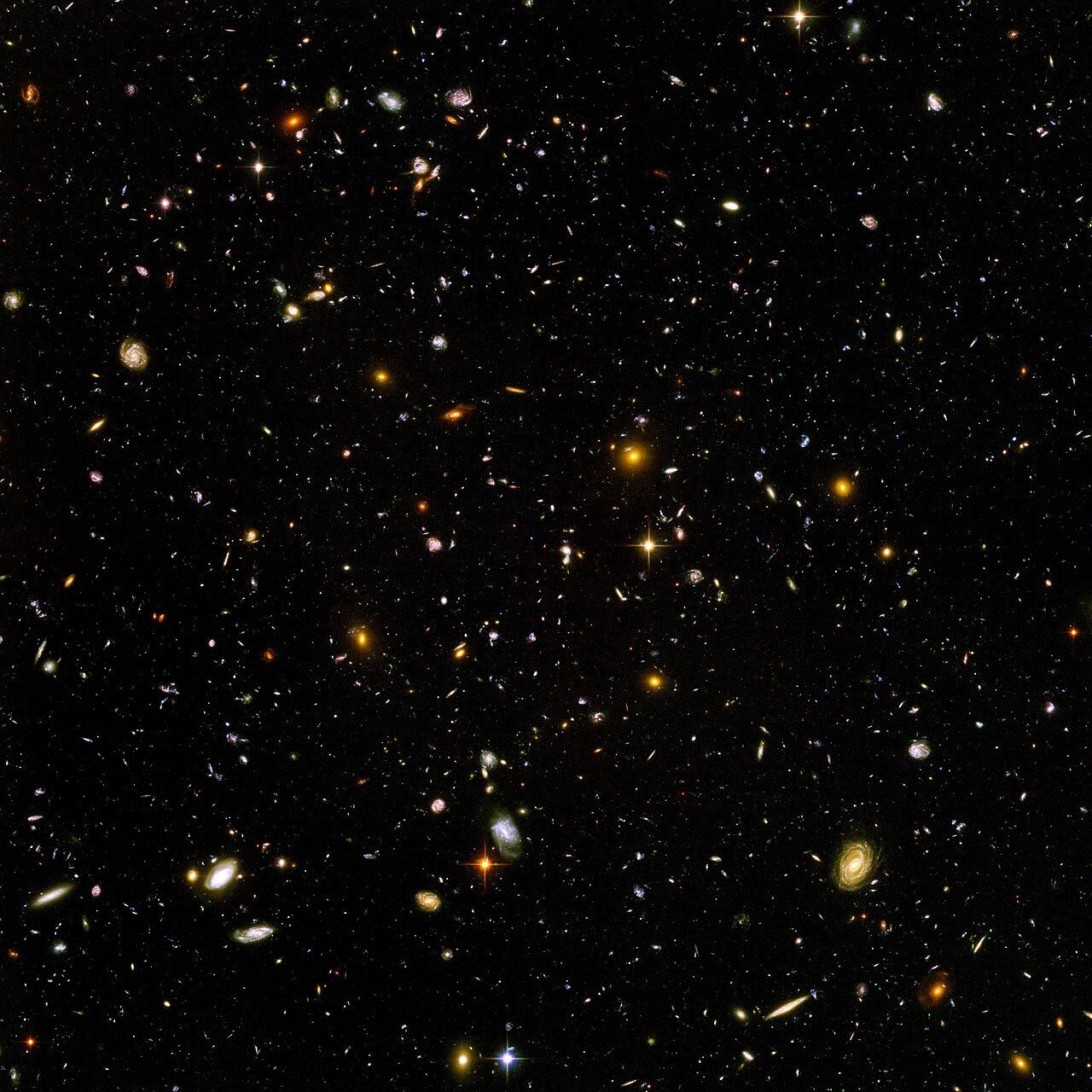
The cosmos as all there is, science as its self-knowledge, religion as a human product to be explained: a tradition with its own orthodoxies, saints’ days (Comte’s calendar), and a state record — Lysenko included — that this section audits like any other.
The secular and naturalist position holds that the cosmos is all there is, that science is the cosmos becoming knowable, and that religion is a human product to be explained by the sciences of mind and society. Its classical forms are Comte’s positivism (which, embarrassingly for the label, founded a literal Religion of Humanity with priests and a calendar) and the materialisms that followed; its contemporary form is the ‘new atheism’ of Dawkins, Hitchens, Harris, and Dennett, plus the quieter naturalism of most working philosophy of science.
Naturalism has its own internal science-and-values arguments: whether ethics survives naturalization, whether consciousness fits the picture (the ‘hard problem’ is a naturalist family quarrel), and whether scientism — the overextension of scientific authority — is a slur or a description. It also has an institutional record to answer for where it held state power, from the French Revolution’s cult of Reason to Lysenko’s genetics; the profile records those cases in the eras, because a register of stances that only audits religions would itself be a stance.
Recorded Stances in the Register
Artificial intelligence Regulated
Secular governance is the operative position: risk-based regulation (the EU AI Act), safety institutes, and an internal quarrel between acceleration and precaution that maps onto no theological line — except the shared refusal, recorded across this register, to let accountability evaporate into the system.
Germline gene editing Regulated
The secular consensus as far as it goes is governance, not metaphysics: the National Academies’ framework permits clinical germline editing only under stringent conditions (serious disease, no alternatives, oversight), most jurisdictions prohibit it outright, and the field’s internal quarrel — after He Jiankui’s imprisonment — is over whether the conditions can ever be met or the permission withdrawn permanently.
Human reproductive cloning Condemned
The President’s Council and most secular bioethics bodies recommended prohibition on safety and on the ethics of manufacture; the secular case was made in the language of human dignity (Habermas’s ethics of the species) precisely where its authors could not use theology.
Nuclear power Contested within the tradition
Secular assessment divides on arithmetic: climate models in which decarbonization without nuclear is harder (IPCC pathways) against waste, cost, and proliferation arguments — a technical quarrel conducted in the open.
Nuclear weapons Condemned
The scientists’ own secular movements (the Russell–Einstein Manifesto of 1955, Pugwash) made abolition a professional-ethical position inside science itself; state practice has ignored both manifestos and magisteria with equal consistency, which the register records without editorializing.
Space exploration Embraced
Secular space advocacy speaks its own theological-adjacent language — Sagan’s ‘pale blue dot’ as a sermon on humility — and the naturalist establishment treats exploration as the species’ proper work, while its internal critics price the same rockets against the earth’s needs.
The internet and social media Contested within the tradition
Secular argument divides between the network as the enlightenment’s infrastructure and as an attention-extraction industry; the regulatory turn of the 2020s (platform liability, age gates, algorithmic transparency) is the argument becoming law, unfinished.
References
- Auguste Comte, The Positive Philosophy (1830–1842)
- Thomas Nagel, Mind and Cosmos (2012) — an internal critique