

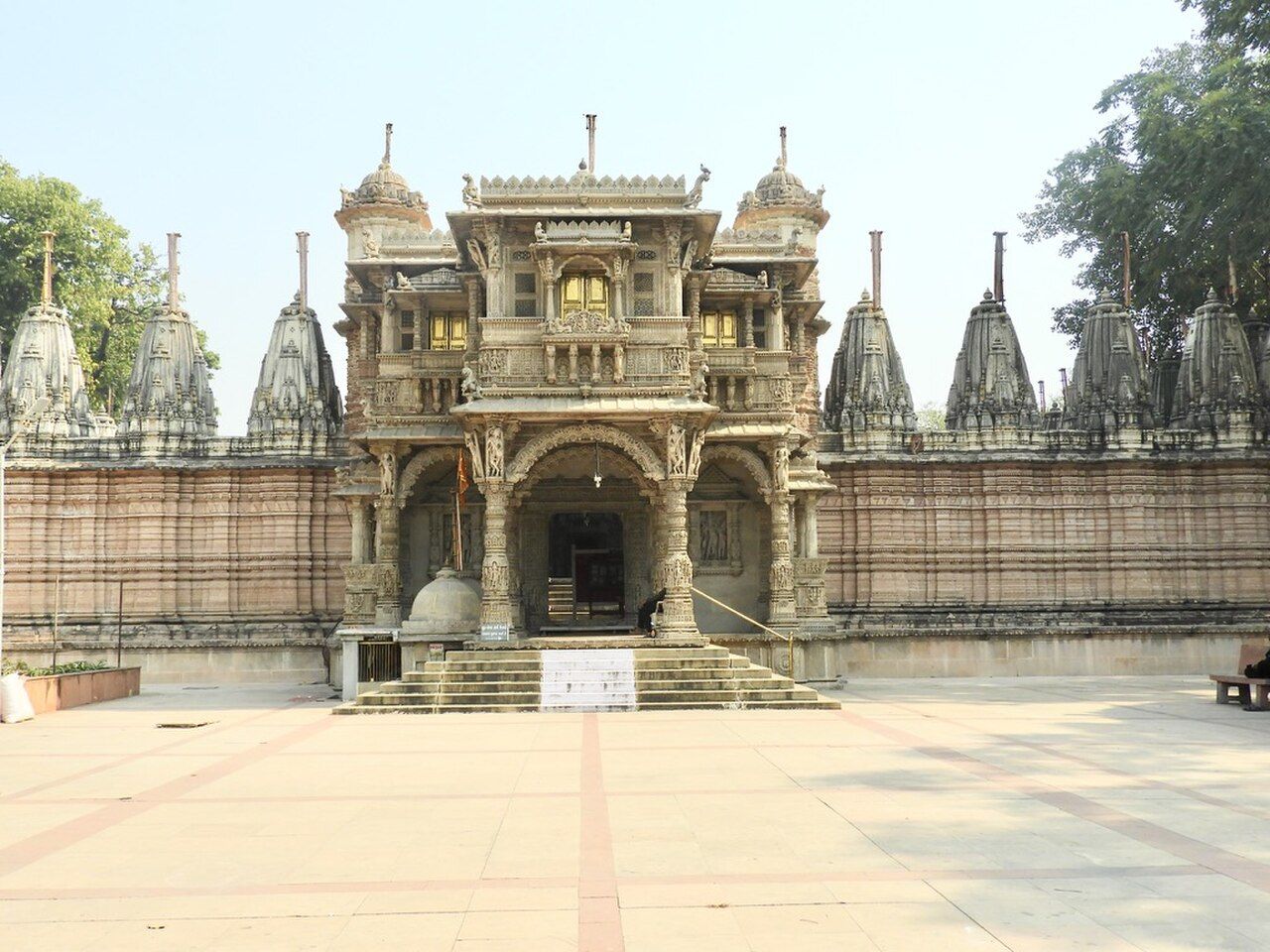
Many-sided truth and non-violence at microbial scale: a beginningless, uncreated cosmos, mathematics of the infinite, and the microscope received as a confirmation rather than a threat.
Tagged: Jain
Jainism contributes to this section its doctrine of anekāntavāda — the many-sidedness of truth — an epistemology built for a plural world, and ahiṃsā radicalized into the most exacting animal and microbial ethics of any tradition: monks sweep the path and filter water to spare minute lives, and the doctrine of a universe inhabited at every scale by jīvas made the microscope, when it arrived, less a shock than a confirmation.
Classical Jain cosmology is non-creationist — the universe was never made, and no god manages it — which relocates the science-religion argument entirely: there is no creator to defend or attack, only a beginningless order to describe, and Jain mathematicians (permutations, combinatorics, early work toward the infinite) described parts of it seriously. Modern Jain positions on medicine balance ahiṃsā against the duty of care, with vegetarianism and increasingly veganism as the community’s normative practice.
References
- Padmanabh S. Jaini, The Jaina Path of Purification (1979)
- Christopher Key Chapple, Nonviolence to Animals, Earth, and Self in Asian Traditions (1993)
Related Across the Site
- atman Glossary Term — Self.
- dharma Glossary Term — That which is upheld; order; duty.
- karma Glossary Term — Action; deed.
- moksha Glossary Term — Release; liberation.
- samsara Glossary Term — Wandering; the flowing-on.
- Ardhamagadhi and the Prakrits Language — The language of the Jain canon and of early Indian scripture and drama, the spoken sister of Sanskrit.
- Sanskrit Language — The sacred language of Hinduism and a scriptural language of Buddhism and Jainism: Vedic first, then the classical language of Indian theology.
- Namokar Mantra Prayer or Creed — Jainism's central mantra of homage to the five supreme beings, recited at the start of prayer and meditation.