

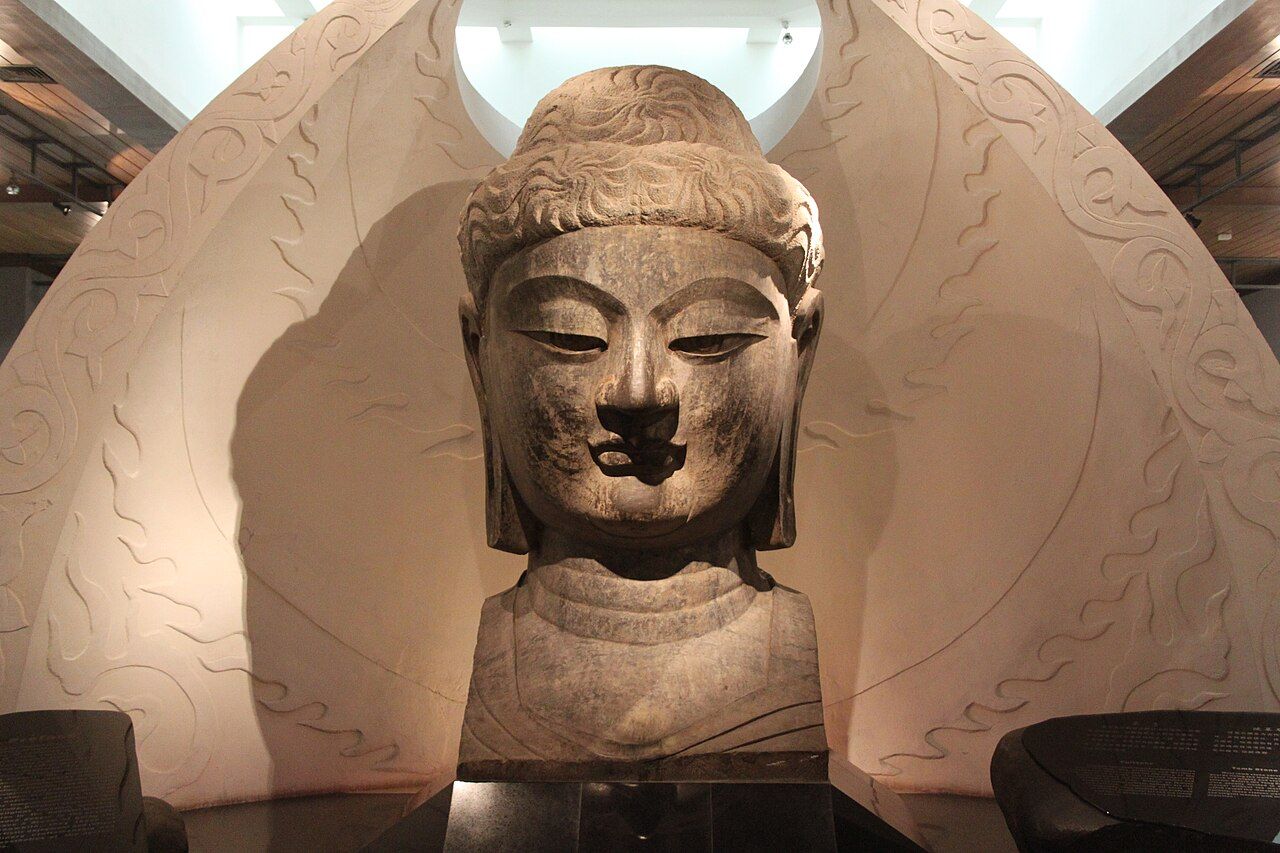
Buddhist devotion opens with homage: bowing before the shrine and going for refuge to the Buddha, the Dhamma, and the Sangha.
Tagged: Meditation Prayer Remembrance Buddhist
How It Is Practiced
Before the image or stūpa, the devotee kneels and bows — in the full prostration, five points touching the ground: knees, elbows, and forehead — and recites the homage 'Namo tassa bhagavato arahato sammāsambuddhassa' (Homage to the Blessed One, the Worthy One, the Fully Enlightened One), then the refuge formula three times: 'I go to the Buddha for refuge; I go to the Dhamma for refuge; I go to the Sangha for refuge,' and often the Five Precepts after it. Flowers, candles, and incense accompany the words.
Purpose and Meaning
The Buddha is not worshipped as a creator god; the homage is recollection (buddhānussati) — calling to mind the teacher's qualities until they steady the mind that remembers them. Taking refuge is the constitutive act of being Buddhist, renewed daily: devotion here is direction. The bow says where safety is sought, and the precepts say what the seeking will cost.
References
- Buddhist devotion — Wikipedia Free / open access
- Refuge in Buddhism — Wikipedia Free / open access
Related Practices
- Offerings at the Buddhist Shrine — Flowers, candles, incense, water, and fruit before the Buddha image: the daily offering whose lesson is impermanence itself.
- Paritta — Protective Chanting — Discourses of the Buddha chanted for protection and blessing — at sickbeds, housewarmings, New Year, and through the night in times of danger.
- The Three Daily Prayers — Jewish devotion is structured by three daily services — morning, afternoon, and evening — built around the Shema and the Amidah.
Related Across the Site
- Dhikr — The Remembrance of God Devotion — Dhikr is the repeated invocation of God's names and phrases — Subḥān Allāh, Alḥamdu lillāh, Allāhu akbar — counted on beads until remembrance becomes a state.
- Japa — Repetition of the Name Devotion — Japa is the murmured or mental repetition of a mantra or a name of God, counted on a mālā of 108 beads, until the Name fills the mind.
- Mettā Bhāvanā — Loving-Kindness Devotion — The systematic cultivation of goodwill toward oneself, benefactors, the neutral, the difficult, and all beings: devotion practiced as the training of the heart.
- Nām Simran — Meditation on the Name Devotion — The repetition of the divine Name — Vāhigurū — in meditation and through the day: the central interior practice of the Sikh path.
- Offerings at the Buddhist Shrine Devotion — Flowers, candles, incense, water, and fruit before the Buddha image: the daily offering whose lesson is impermanence itself.
- Paritta — Protective Chanting Devotion — Discourses of the Buddha chanted for protection and blessing — at sickbeds, housewarmings, New Year, and through the night in times of danger.
- The Jesus Prayer Devotion — The Jesus Prayer repeats one sentence — 'Lord Jesus Christ, Son of God, have mercy on me, a sinner' — until it becomes continual.
- Dhikr Prayer or Creed — The remembrance of God through repeated short formulas of glory, praise, and greatness.