

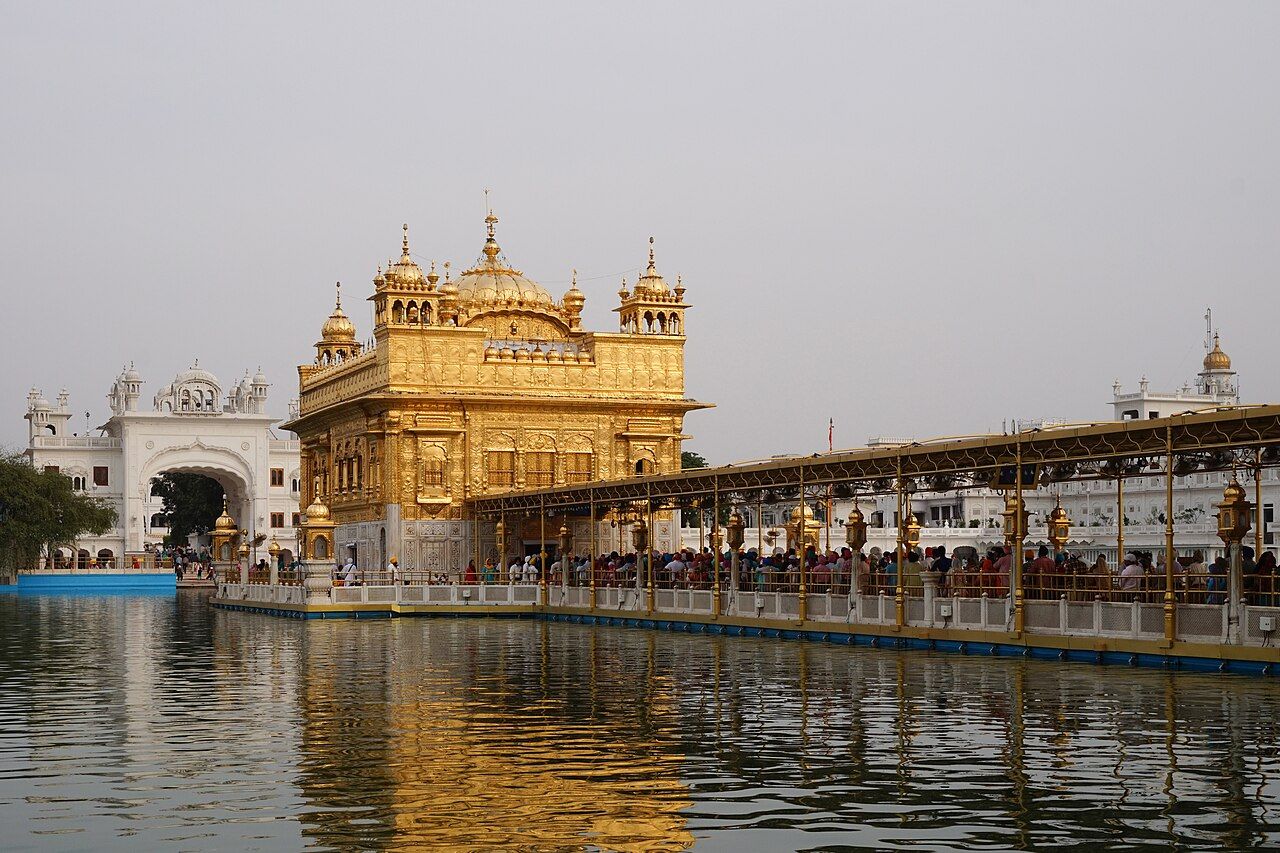
Devotion as service: the gurdwara's free kitchen feeds all comers, seated in one line on the floor, cooked and served by volunteers as worship.
Tagged: Community Sacred time Service Sikh
How It Is Practiced
Every gurdwara keeps a langar: a kitchen and hall where a vegetarian meal is served free to anyone — Sikh or stranger, rich or poor — all seated together in rows (pangat) on the floor. Volunteers (sevadars) do the cooking, serving, and washing up as sevā, selfless service, one of the three pillars of the faith. The institution is credited to Guru Nanak and was made obligatory by Guru Amar Das, who required even the visiting emperor to eat in the line before audience.
Purpose and Meaning
Langar is theology you can eat: the doctrine of human equality enacted as lunch. Sevā makes devotion manual — the hands serve, therefore the heart learns — and the tradition counts it equal to meditation: Guru Nanak's formula joins nām japna (the Name), kirat karni (honest work), and vand chhakna (sharing what one has) into one life, and the langar hall is where the third becomes visible.
References
- Langar (Sikhism) — Wikipedia Free / open access
Related Practices
- Kīrtan in the Gurdwara — In the gurdwara the scripture is sung: professional and congregational singers (ragis) perform the hymns in their appointed ragas before the Guru Granth Sahib.
- Nitnem — The Daily Banis — The Sikh day is built of hymns: Japji Sahib at dawn, Rehras at evening, Kirtan Sohila before sleep — the Guru's word as the day's frame.
- Family Worship — Family worship gathers the household daily or weekly to read Scripture, sing, and pray together at home.
Related Across the Site
- Ancestor Veneration Devotion — Across Indigenous and traditional societies — African, American, Oceanic, and beyond — the dead remain members of the family: fed, consulted, and honored at the household altar and the grave.
- Jumuʿah — The Friday Prayer Devotion — At noon on Friday the community gathers for a sermon and a shortened prayer: the week's public devotion, commanded in the Qur'an itself.
- Kīrtan in the Gurdwara Devotion — In the gurdwara the scripture is sung: professional and congregational singers (ragis) perform the hymns in their appointed ragas before the Guru Granth Sahib.
- The Nineteen Day Feast Devotion — Every nineteen days, at the opening of each Bahá'í month, the community gathers for devotion, consultation, and fellowship — the basic unit of Bahá'í communal life.
- The Ramadan Fast Devotion — For the month of Ramadan, from dawn to sunset, the fast from food, drink, and desire — broken nightly with family and prayer, and crowned by the Night of Decree.
- The Sabbath Table Devotion — Friday night's table — candles, wine, two loaves, blessings, and song — is the home liturgy at the center of Jewish devotion.
- Uposatha — The Observance Days Devotion — On the moon's quarters, lay Buddhists intensify their practice: eight precepts instead of five, white clothes, the temple for the day, and sermons until night.
- Sikhism World View — Sikhism confesses one God, revealed through Guru Nanak and the ten Gurus; honest work, shared wealth, and remembrance of God lead to liberation.