

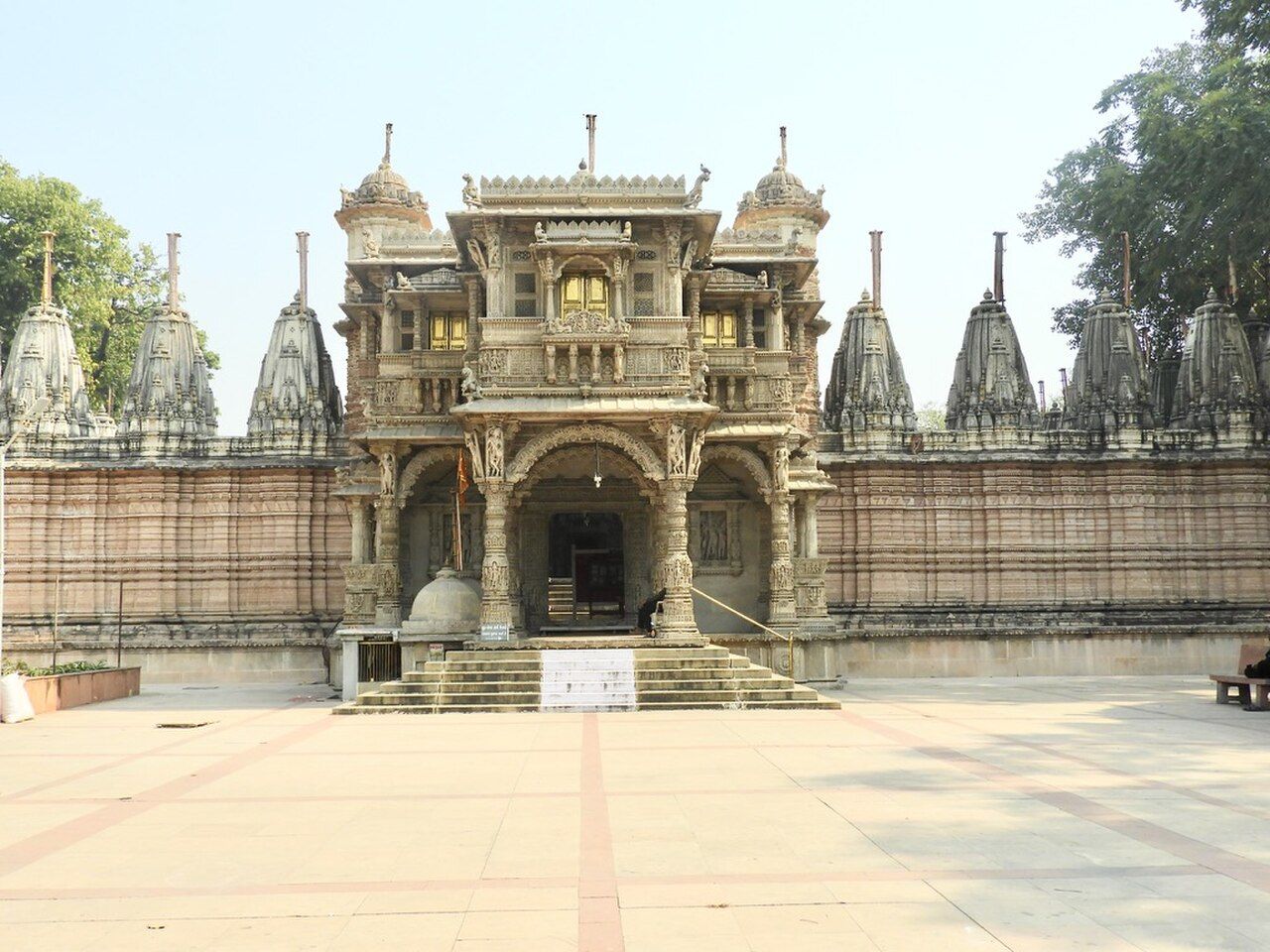
Jainism's supreme prayer bows to no god: it salutes the five supreme ones — the conquerors, the liberated, the teachers, the preceptors, and all monks.
Tagged: Meditation Prayer Remembrance Jain
How It Is Practiced
The mantra, in Prakrit, runs: Ṇamo arihantāṇaṃ (I bow to the worthy ones), ṇamo siddhāṇaṃ (to the liberated), ṇamo āyariyāṇaṃ (to the teachers), ṇamo uvajjhāyāṇaṃ (to the preceptors), ṇamo loë savva-sāhūṇaṃ (to all monks in the world) — followed by the affirmation that this fivefold salutation destroys all sin and is the most auspicious of all auspicious things. It opens every Jain rite and study session, is counted on the rosary in meditation, whispered in danger and at the hour of death, and taught to children as their first prayer.
Purpose and Meaning
The Ṇamokāra asks for nothing. It is devotion as orientation: the soul salutes those who have crossed, in the order of the path — those still teaching the way, those who embody it, and the goal itself. Its theologians call it the root mantra from which all Jain scripture unfolds; its practitioners call it, simply, the prayer that is always in season.
References
- Jain eLibrary Free / open access
Related Practices
- Sāmāyika — The Meditation of Equanimity — For forty-eight minutes — one muhūrta — the Jain layperson sits in renunciation: no harm, no business, no distinction between friend and stranger.
- Pratikramaṇa — The Rite of Repentance — Morning and evening, and climactically once a year, the Jain turns back over the day's harms — in thought, word, and deed — and asks forgiveness of every living being.
- Nām Simran — Meditation on the Name — The repetition of the divine Name — Vāhigurū — in meditation and through the day: the central interior practice of the Sikh path.
Related Across the Site
- Dhikr — The Remembrance of God Devotion — Dhikr is the repeated invocation of God's names and phrases — Subḥān Allāh, Alḥamdu lillāh, Allāhu akbar — counted on beads until remembrance becomes a state.
- Japa — Repetition of the Name Devotion — Japa is the murmured or mental repetition of a mantra or a name of God, counted on a mālā of 108 beads, until the Name fills the mind.
- Nām Simran — Meditation on the Name Devotion — The repetition of the divine Name — Vāhigurū — in meditation and through the day: the central interior practice of the Sikh path.
- Pratikramaṇa — The Rite of Repentance Devotion — Morning and evening, and climactically once a year, the Jain turns back over the day's harms — in thought, word, and deed — and asks forgiveness of every living being.
- Sāmāyika — The Meditation of Equanimity Devotion — For forty-eight minutes — one muhūrta — the Jain layperson sits in renunciation: no harm, no business, no distinction between friend and stranger.
- The Jesus Prayer Devotion — The Jesus Prayer repeats one sentence — 'Lord Jesus Christ, Son of God, have mercy on me, a sinner' — until it becomes continual.
- Vandana and Taking Refuge Devotion — Buddhist devotion opens with homage: bowing before the shrine and going for refuge to the Buddha, the Dhamma, and the Sangha.
- Dhikr Prayer or Creed — The remembrance of God through repeated short formulas of glory, praise, and greatness.