
A Latin creed, traditionally ascribed to Athanasius, that states the doctrines of the Trinity and the Incarnation in precise detail.
Tagged: Trinity Creeds and Confessions
The Text
Whosoever will be saved, before all things it is necessary that he hold the catholic faith. Which faith except every one do keep whole and undefiled, without doubt he shall perish everlastingly.
And the catholic faith is this: that we worship one God in Trinity, and Trinity in Unity; neither confounding the Persons, nor dividing the Substance. For there is one Person of the Father, another of the Son, and another of the Holy Ghost. But the Godhead of the Father, of the Son, and of the Holy Ghost is all one: the Glory equal, the Majesty co-eternal. Such as the Father is, such is the Son, and such is the Holy Ghost. The Father uncreate, the Son uncreate, and the Holy Ghost uncreate. The Father incomprehensible, the Son incomprehensible, and the Holy Ghost incomprehensible. The Father eternal, the Son eternal, and the Holy Ghost eternal. And yet they are not three eternals, but one eternal. As also there are not three incomprehensibles, nor three uncreated, but one uncreated, and one incomprehensible. So likewise the Father is Almighty, the Son Almighty, and the Holy Ghost Almighty. And yet they are not three Almighties, but one Almighty. So the Father is God, the Son is God, and the Holy Ghost is God. And yet they are not three Gods, but one God. So likewise the Father is Lord, the Son Lord, and the Holy Ghost Lord. And yet not three Lords, but one Lord. For like as we are compelled by the Christian verity to acknowledge every Person by himself to be God and Lord, so are we forbidden by the catholic religion to say there be three Gods or three Lords.
The Father is made of none; neither created, nor begotten. The Son is of the Father alone; not made, nor created, but begotten. The Holy Ghost is of the Father and of the Son; neither made, nor created, nor begotten, but proceeding. So there is one Father, not three Fathers; one Son, not three Sons; one Holy Ghost, not three Holy Ghosts. And in this Trinity none is afore or after other; none is greater or less than another; but the whole three Persons are co-eternal together and co-equal. So that in all things, as is aforesaid, the Unity in Trinity and the Trinity in Unity is to be worshipped. He therefore that will be saved must thus think of the Trinity.
Furthermore it is necessary to everlasting salvation that he also believe rightly the Incarnation of our Lord Jesus Christ. For the right faith is that we believe and confess that our Lord Jesus Christ, the Son of God, is God and Man; God, of the Substance of the Father, begotten before the worlds; and Man, of the substance of his Mother, born in the world; perfect God and perfect Man, of a reasonable soul and human flesh subsisting; equal to the Father as touching his Godhead, and inferior to the Father as touching his Manhood. Who, although he be God and Man, yet he is not two, but one Christ; one, not by conversion of the Godhead into flesh, but by taking of the Manhood into God; one altogether, not by confusion of Substance, but by unity of Person. For as the reasonable soul and flesh is one man, so God and Man is one Christ; who suffered for our salvation, descended into hell, rose again the third day from the dead. He ascended into heaven, he sitteth on the right hand of the Father, God Almighty, from whence he shall come to judge the quick and the dead. At whose coming all men shall rise again with their bodies and shall give account for their own works. And they that have done good shall go into life everlasting, and they that have done evil into everlasting fire.
This is the catholic faith, which except a man believe faithfully, he cannot be saved.
Historical Context
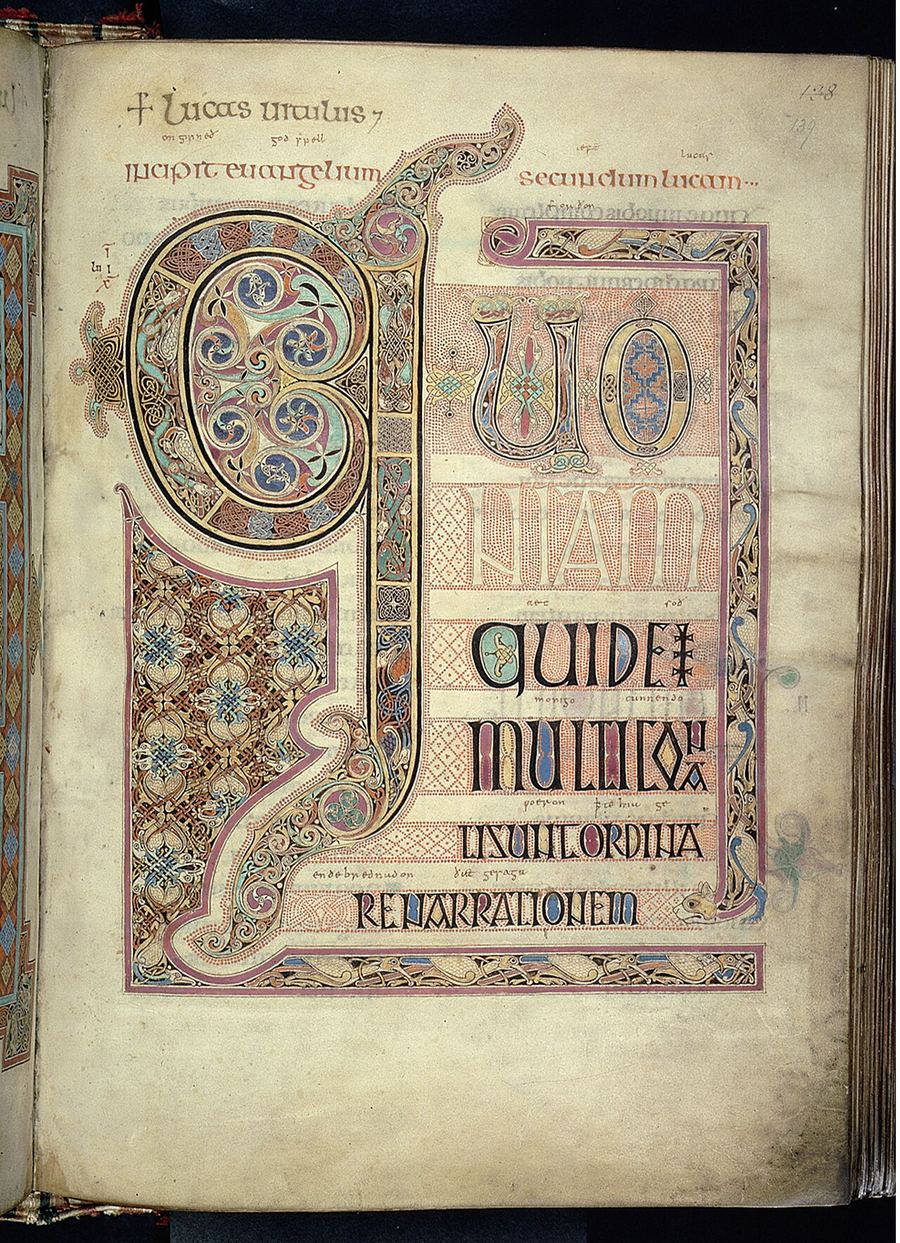
The Athanasian Creed, also called the Quicunque Vult after its opening Latin words, was not written by Athanasius of Alexandria (c. 296–373), though it was long ascribed to him. Scholars date its Latin composition to southern Gaul in the late 5th or early 6th century. Its opening and closing sentences attach salvation to holding the faith it states, which has made its use debated, but it remains one of the three ecumenical creeds recognized in the West.
Use and Practice
In the West the creed was traditionally recited at Morning Prayer on Trinity Sunday and other appointed feasts in the Book of Common Prayer, and it is confessed in Lutheran service books. Eastern churches do not use it liturgically.
References
- Creeds of Christendom, Vol. II (CCEL) Free / open access
- The Book of Common Prayer Free / open access
Related Prayers and Creeds
- Nicene Creed — The creed of the councils of Nicaea (325) and Constantinople (381), the central doctrinal confession shared by most Christians.
- Apostles' Creed — The ancient baptismal creed of the Western Church, summarizing belief in the Father, Son, and Holy Spirit.
- Chalcedonian Definition — The Council of Chalcedon's 451 definition that Christ is one person in two natures, fully God and fully human.
Related Across the Site
- Apostles' Creed Prayer or Creed — The ancient baptismal creed of the Western Church, summarizing belief in the Father, Son, and Holy Spirit.
- Augsburg Confession Prayer or Creed — The primary Lutheran confession of faith, presented to Emperor Charles V at Augsburg in 1530.
- Belgic Confession Prayer or Creed — A 37-article Reformed confession written in 1561 by Guido de Brès for the churches of the Low Countries.
- Chalcedonian Definition Prayer or Creed — The Council of Chalcedon's 451 definition that Christ is one person in two natures, fully God and fully human.
- Heidelberg Catechism Prayer or Creed — A Reformed catechism of 129 questions and answers, published in 1563 and organized around guilt, grace, and gratitude.
- London Baptist Confession Prayer or Creed — The confession of Particular Baptist churches, first published in 1677 and formally adopted in London in 1689.
- Nicene Creed Prayer or Creed — The creed of the councils of Nicaea (325) and Constantinople (381), the central doctrinal confession shared by most Christians.
- Westminster Confession and Catechisms Prayer or Creed — The Presbyterian standards produced by the Westminster Assembly in the 1640s: a confession of faith and a Larger and Shorter Catechism.