

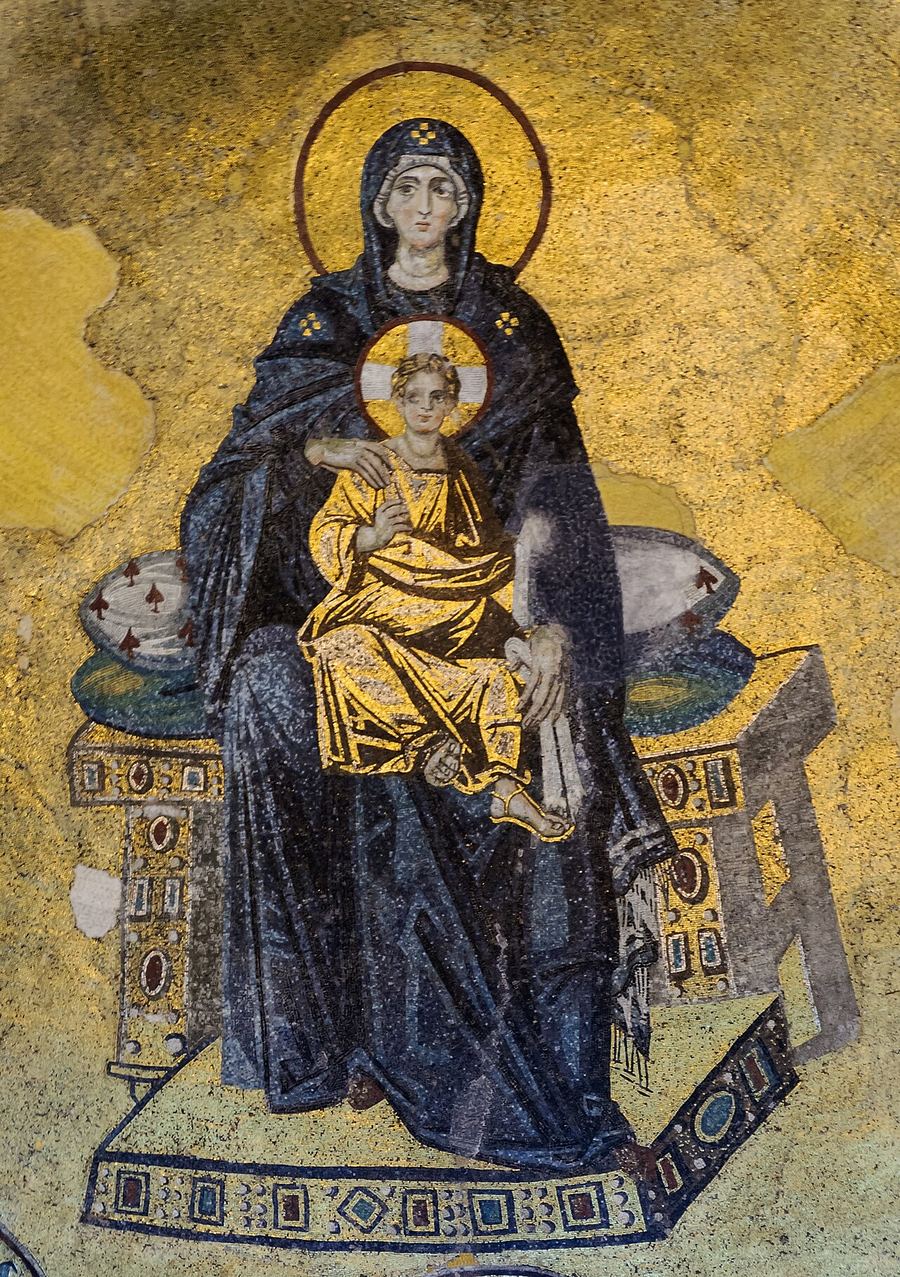
A prayer rule is a fixed daily pattern of prayers, readings, and prostrations kept under a spiritual father's guidance.
Tagged: Daily Prayer Prayer Silence
How It Is Practiced
The rule is set individually: a standard core of morning and evening prayers from the prayer book, psalms, a chapter of the Gospel, intercessions, and a set number of Jesus Prayers and prostrations, adjusted by the spiritual father to what the person can keep without fail. It is prayed standing before the icons at home, at set hours, and is deliberately modest — a small rule kept daily is prized over an ambitious one that collapses. On feast days and in Lent the rule grows; in illness it shrinks, by blessing.
Purpose and Meaning
The rule exists to make prayer a habit of the whole life rather than a mood. Its fixed shape carries the person through dryness and distraction, and its personal calibration teaches humility: the rule serves the person, and obedience to a kept measure guards against both laziness and spiritual vanity. Orthodox writers compare it to the banks of a river, which do not hinder the water but give it force.
References
- Prayer Rule — Orthodox Church in America Free / open access
Related Practices
- The Jesus Prayer — The Jesus Prayer repeats one sentence — 'Lord Jesus Christ, Son of God, have mercy on me, a sinner' — until it becomes continual.
- Prostrations and Bows — Orthodox prayer is prayed with the body: bows from the waist and full prostrations punctuate the daily rule and the services.
- Fasting (Orthodox) — Orthodox fasting keeps set seasons and weekdays free of meat, dairy, and often oil and wine, joined to prayer and almsgiving.
Related Across the Site
- Al-Fatiha Prayer or Creed — The opening chapter of the Qur'an, recited in every unit of the ritual prayer.
- Amidah Prayer or Creed — The standing prayer at the center of every Jewish prayer service, recited silently while standing.
- Jesus Prayer Prayer or Creed — A short, repeated invocation of Jesus asking for mercy, central to the Orthodox hesychast tradition.
- Nitnem Prayer or Creed — The daily banis (hymns) prescribed for Sikh devotion: morning, evening, and night prayers from the Sikh scriptures.
- Refuge Prayer (Tisarana) Prayer or Creed — The formula of going for refuge to the Buddha, the Dhamma, and the Sangha — the act that makes a person a Buddhist.
- Salah Prayer or Creed — The ritual prayer performed five times daily, with fixed postures, recitations, and the closing testimony (Tashahhud).
- The Angelus Prayer or Creed — A thrice-daily prayer of versicles and Hail Marys commemorating the Annunciation and the Incarnation.
- The Lord's Prayer (Our Father) Prayer or Creed — The prayer Jesus taught his disciples in Matthew 6 and Luke 11, shared by Christians of every tradition.